
“Zora rewards” means something very different in 2026 than it did when people farmed mints for a future airdrop. The ZORA token launched on Base in April 2025, the retroactive airdrop has been claimable since, and the platform has turned into a social app where every profile is a creator coin and every post can become a content coin. The rewards now are trading fees, paid continuously to creators and referrers. This guide explains where that money comes from, how to see what you earn, and which “Zora claim” links are traps.
Zora today: a coin for every profile and post
Zora started as an NFT protocol and marketplace, then built its own L2. Since 2025 it has reorganised around coins. In March 2025 every profile became a creator coin. Posts became content coins paired against the creator’s coin. The app later added Trends (topic coins anyone can post into, without needing a creator coin since March 2026), video feeds, livestreaming and direct messages. Support for NFTs, cointags, platform airdrops and several upload formats has been removed.
The chain story moved too. Coins run on Base; Solana deposits arrived in December 2025; and in August 2026 Zora added Robinhood Chain and began sponsoring gas for swaps across Base, Robinhood Chain and Solana. Since April 2026 users can also pay gas in USDC or ZORA.
Official resources: zora.co, the developer documentation at docs.zora.co, the Zora help centre, and the X account @zora.

How creator coin supply works
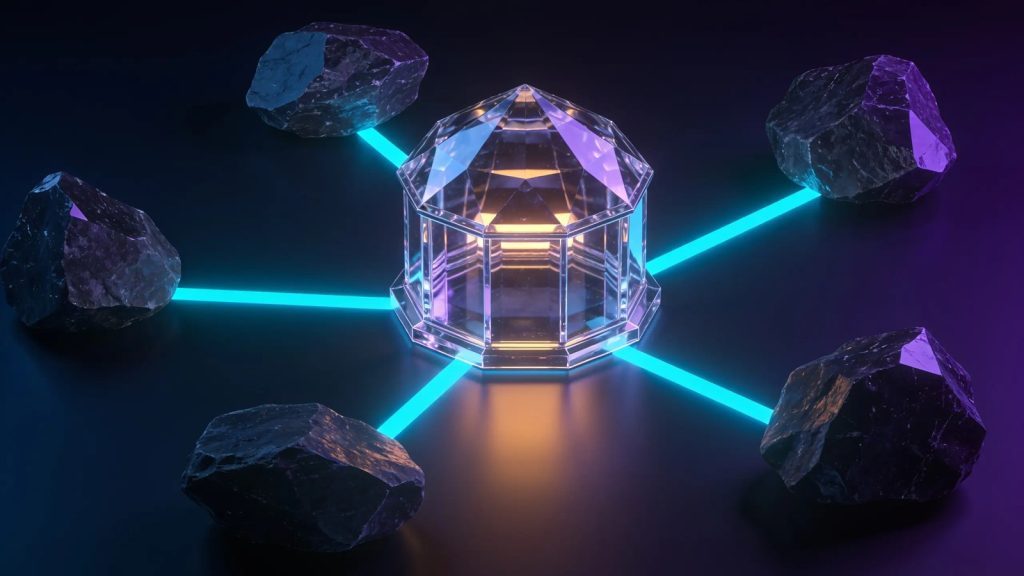
Each creator coin has a fixed supply of 1 billion. Half (500 million) goes into a liquidity pool at launch so it can be traded immediately. The other 500 million vests to the creator linearly over five years. Content coins also have 1 billion supply: 10 million go to the creator at once and the remaining 990 million are available on the market. Content coins are backed by the creator coin, which is why fees route through it.
Where the rewards come from: the 1% fee
Every trade of a creator or content coin pays a 1% fee. Zora’s help centre gives the current split (effective since 15 September 2025):
| Recipient | Share of trade | Who it is |
|---|---|---|
| Creator | 0.50% | The person whose coin is traded |
| Market contribution | 0.20% | Locked as extra pool liquidity, not paid out |
| Platform referral | 0.20% | Whoever invited the creator to Zora, earning on all trades of that coin |
| Protocol | 0.05% | Zora |
| Trade referral | 0.04% | The app or user whose link produced that specific trade |
| Doppler | 0.01% | The launch protocol underneath |
Two variations matter. Trend coins charge only 0.01%. Custom Pairs, introduced in August 2026, let a creator pair a coin with ETH, USDC, tokenised stocks or Solana tokens instead of their creator coin; those trades still pay 1%, but 0.70% goes to the creator, 0.25% to the protocol and 0.05% to Doppler, paid instantly to the creator’s Zora wallet.
According to the developer docs, market rewards on standard pairs are converted along the backing chain before distribution (content coin to creator coin to ZORA), so most recipients are paid in ZORA. The “market contribution” or LP share is not paid to anyone; it is placed as single-sided liquidity outside the current price range, which deepens the pool over time.
The ZORA token and the 2025 airdrop
ZORA has a 10 billion supply. At launch, 10% went to a retroactive airdrop for creators, collectors, developers and contributors active between 1 January 2020 and 20 April 2025. The rest was split 26% investors, 20% community incentives, 20% treasury, 19% team and 5% liquidity. Zora described the token as “for fun”, with no governance rights or claim on the company.
The launch itself was messy: trading started before Zora’s official post, and early claimants had to interact with the contract on Base directly. Zora’s FAQ later stated there is no claim deadline; unclaimed tokens stay in the claim contract. That fact is useful in two ways: if you were active before April 2025 you can still check, and anyone telling you the claim “closes tonight” is lying.
At the time of writing, Zora has not announced a second airdrop or a points program. The 20% community incentives allocation exists, but how it will be used beyond the fee system has not been published.
How to track your Zora earnings
- Use the official app or zora.co, signed in with the same account that owns your profile. Your creator coin, vested balance and earnings are shown on your profile.
- Note your wallet setup. Zora accounts typically use an in-app smart wallet, and some users also link an external wallet. Rewards go to the account wallet, so check the right address on a Base explorer if numbers look wrong.
- Separate the income streams. Creator fees, platform-referral fees (from creators you invited) and trade-referral fees arrive separately. Track them separately so you know which activity actually pays.
- Remember fees arrive in ZORA for standard pairs. Your earnings in dollar terms move with ZORA’s price. Custom Pairs pay in the pair asset instead.
- Track the vesting. Your 500 million creator-coin allocation unlocks gradually over five years; the app shows the vested amount.
- Check an old airdrop allocation only through links on zora.co, the help centre or @zora.

Risks particular to creator coins
- Extreme volatility. Most content coins trade thinly. Buying early in a post’s life and seeing it fall 90% is the norm, not the exception. Zora itself describes coins as for entertainment and social engagement.
- Creator selling. Creators receive vested supply continuously and can sell it. Holders of a creator coin are exposed to the creator’s own decisions.
- ZORA price exposure. Because fees convert to ZORA, earning a lot of fees does not guarantee a lot of value.
- Impersonation. Anyone can create a profile. Fake coins using a celebrity’s name or a brand appear regularly; check the profile’s verified links before buying.
- Multi-chain confusion. With Base, Solana and Robinhood Chain all supported, sending assets to the wrong network or wrong address type is a real way to lose funds.
- Tax and income reporting. Fee income paid in tokens may be taxable when received in many jurisdictions. Keep records of what arrived and when.
How to spot fake Zora claim links
- Zora’s domain is zora.co, with docs.zora.co and support.zora.co. Lookalikes such as “zora-claim”, “zoraairdrop” or other TLDs are not official.
- “Season 2 ZORA airdrop” pages are fake; no second airdrop has been announced.
- Since the platform removed its own airdrop feature, an unsolicited token that appears in your Zora wallet with a website in its name is not from Zora.
- Zora does not need your seed phrase or a signature granting token approvals to show your earnings.
- Be careful with links in replies under @zora posts and with “creator support” DMs; they are a common drainer route.
FAQ
Can I still claim the 2025 ZORA airdrop?
Zora has said there is no claim deadline. If you were eligible, the tokens remain in the claim contract; check only via official links.
How much does a creator earn per trade?
0.5% of each trade on a standard creator or content coin, or 0.70% on Custom Pairs.
Do I earn anything for inviting creators?
Yes. The platform referrer earns 0.2% of every trade on that creator’s coin.
Is there a Zora points program?
Not at the time of writing. Rewards come from trading fees, not points.
Verdict
Zora’s rewards are now straightforward and transparent: a published 1% fee split that pays creators and referrers on every trade. For creators with an audience, it is a real income stream, though one paid largely in a volatile token. For traders, creator and content coins are high-risk speculation. Track your income through the official app, treat any “new Zora airdrop” as fake until @zora says otherwise, and never trade more than you can afford to lose.