Author: Jack Mercer

  • Galxe Earndrop 2026: How to Find Campaigns and Claim Safely

    Galxe Earndrop 2026: How to Find Campaigns and Claim Safely

    Galxe has become one of the main places where crypto users discover quests, loyalty campaigns, token distributions, and claim pages. The most important fact for readers is simple: Galxe Earndrop is an official Galxe product for token distribution, but every individual campaign still needs to be checked against the project’s own official channels before you connect a wallet or sign anything. This guide explains how I evaluate Galxe Earndrop campaigns in 2026, how to complete tasks without taking unnecessary wallet risk, and how to spot fake claim pages before they cost you money.

    Key Facts

    • Network: Varies by campaign; always check the campaign page and the project’s official documentation.
    • Token ticker: Campaign-specific. Galxe itself may host many different token distributions.
    • Snapshot / claim dates: Campaign-specific; as of July 27, 2026, dates must be verified on the official Galxe campaign and project channels.
    • Cost to participate: Often free for social tasks, but onchain tasks may require gas or protocol fees.
    • Estimated time required: 10–45 minutes for a typical quest set, longer if bridge, swap, or identity steps are required.
    Galxe Earndrop 2026: How to Find Campaigns and Claim Safely editorial illustration 2

    What Is Galxe?

    Galxe is an onchain distribution and growth platform used by crypto projects to run quests, credential campaigns, loyalty programs, and claim flows. Its official Earndrop page describes the product as “Airdrops Done Right” and positions it as a way for teams to distribute tokens with a more structured claim experience.

    For airdrop hunters, Galxe matters because it often sits between a user and a project campaign. You might discover a campaign on Galxe, complete social or onchain tasks, receive a credential, and later use that activity as one signal in a reward or allowlist process. That does not mean every Galxe campaign is a guaranteed airdrop. It means the campaign is an official task environment that can be useful when the underlying project is credible.

    When I connected my wallet to Galxe-style quest platforms, the first thing I checked was not the reward graphic. I checked the URL, the project’s own website, the official X account, and whether the task made sense. A real campaign should not ask for a seed phrase, private key, or unlimited token approval just to join a basic quest.

    How the Points/Airdrop Program Works

    Galxe Earndrop is best understood as infrastructure, not a single airdrop. A project can use Galxe to set eligibility rules, distribute claim access, run quests, and reduce friction for users. The reward, token, chain, and deadline depend on the individual campaign.

    For users, the workflow usually starts with discovery. You land on a campaign page, verify that the campaign belongs to the real project, connect a wallet, and complete the listed tasks. These tasks can include following official accounts, visiting pages, answering quiz questions, minting credentials, making testnet transactions, joining a community, or proving previous onchain activity.

    The safest mindset is to treat every campaign as unconfirmed until you can match it to official project communication. Galxe may host the campaign, but the project controls the economic promise. If the project never says a token reward is confirmed, write that down in your farming notes and treat the campaign as optional exposure rather than expected income.

    Before spending gas, compare the opportunity with our broader guide on how to evaluate a crypto airdrop in 2026. The same rules apply: check the team, funding, chain, task cost, deadline, and whether the upside is worth the operational risk.

    Step-by-Step Guide

    Step 1: Start from the official Galxe domain

    Go directly to Galxe Earndrop or app.galxe.com. Do not start from a random link in a Telegram group, paid comment, or copied short URL. Fake claim pages often copy the same branding and then change only the wallet-connection flow.

    What to expect: the real page should use the Galxe domain and load a campaign interface without asking for your seed phrase. If the page asks you to import a wallet using recovery words, close it immediately.

    [SCREENSHOT: Browser address bar showing the official galxe.com or app.galxe.com domain before wallet connection]

    Step 2: Verify the project behind the campaign

    Open the project’s official website, documentation, blog, or X profile in a separate tab. Look for the campaign announcement there. If Galxe shows a reward campaign but the project’s official channels do not mention it, treat the campaign as unverified until you find a stronger source.

    What to expect: real campaigns usually link back to the project’s main site or official social profile. If the campaign uses a similar-looking name but has no official confirmation, skip it or use a burner wallet with no valuable assets.

    [SCREENSHOT: Official project announcement linking to a Galxe campaign]

    Step 3: Read every task before connecting a wallet

    Many users connect first and think later. That is backwards. Read the task list, estimate time and gas, and identify whether the campaign requires social actions, testnet actions, mainnet transactions, token approvals, or NFT mints.

    What to expect: a normal quest may require a signature to verify ownership or an onchain action with a small fee. It should not require blind approval for all assets in your wallet.

    [SCREENSHOT: Galxe campaign task list with task type labels highlighted]

    Step 4: Use a dedicated farming wallet

    For most campaigns, I prefer a dedicated wallet that does not hold long-term assets. This is especially important when testing new projects, bridges, or claim interfaces. A farming wallet keeps your main holdings separate from experimental interactions.

    What to expect: you may need to fund the wallet with a small amount of gas on the required network. Keep records of what you spent so you can compare the campaign cost with any future reward.

    [SCREENSHOT: Wallet account selector showing a separate campaign wallet]

    Step 5: Complete tasks in a logical order

    Start with free tasks such as reading instructions, following official links, or completing quizzes. Leave paid onchain tasks until after you verify that the campaign is worth the cost. If a campaign requires a bridge or swap, check network fees first.

    What to expect: Galxe may update task status after a signature, social verification, or blockchain confirmation. Give onchain tasks time to index before repeating the same action and spending more gas.

    [SCREENSHOT: Completed and pending quest tasks inside the campaign dashboard]

    Step 6: Record the campaign details

    Save the official campaign URL, project URL, network, wallet address used, tasks completed, date, and any transaction hashes. This record protects you later if a claim checker asks for the same wallet or if you need to prove which campaign you joined.

    What to expect: good tracking reduces repeat work and helps you avoid the top mistakes airdrop farmers still make in 2026, especially using the wrong wallet or forgetting which campaigns were completed.

    [SCREENSHOT: Simple spreadsheet with project, campaign URL, wallet, date, and status columns]

    Galxe Earndrop 2026: How to Find Campaigns and Claim Safely editorial illustration 3

    Eligibility Criteria

    Eligibility depends on the campaign. Some Galxe campaigns use simple task completion. Others may require a credential, a minimum score, a specific NFT, a wallet age threshold, prior protocol use, or geographic restrictions. If a token reward is involved, the project may also apply anti-sybil rules to filter wallets that appear automated or coordinated.

    Common disqualifiers include using multiple low-quality wallets, failing required social checks, completing only part of the task list, using the wrong network, or interacting after a deadline. Some projects also exclude sanctioned jurisdictions or users who violate campaign terms.

    Do not assume that a completed Galxe task equals a guaranteed allocation. It can be a signal, a raffle entry, an allowlist credential, or a requirement for a later claim. As of July 27, 2026, unless the project officially confirms reward rules, allocation size and final eligibility are not officially confirmed.

    How to Avoid Scams

    The correct official Galxe URLs to check first are https://www.galxe.com/earndrop and https://app.galxe.com/. For any project campaign, also verify the project’s own official site and documentation. Never trust a claim link only because it appears in a viral post.

    Never enter your seed phrase. Never paste a private key. Never install a wallet extension from a campaign pop-up. Be careful with domains that replace letters, add hyphens, use unusual endings, or redirect through short links.

    If you already clicked a suspicious page, disconnect the site from your wallet, revoke risky approvals with a trusted approval checker, and move valuable assets away if you signed anything you do not understand. Our guide to airdrop automation and tracking tools is useful here because good tooling helps you catch repeated wallet exposure.

    Is the Airdrop Confirmed?

    Galxe Earndrop as a product is official, but each campaign must be judged separately. If a campaign says it is a token claim and the project confirms that claim on official channels, you can treat the claim link as a real candidate after URL verification. If the campaign only offers points, credentials, or community status, then the future token outcome may be unconfirmed.

    As of July 27, 2026, do not assume that every Galxe campaign leads to a token. The signals to watch are official tokenomics, snapshot announcements, claim dates, eligibility checkers, smart contract addresses, and documentation from the project itself. If those signals are missing, farm conservatively.

    FAQ

    Is Galxe Earndrop the same as a guaranteed airdrop?

    No. Galxe Earndrop is distribution infrastructure. Individual projects decide whether a campaign includes a confirmed token reward.

    Do I need to pay to join Galxe campaigns?

    Some tasks are free, while onchain tasks may require gas or protocol fees. Always check the network and task type before you start.

    What wallet should I use for Galxe campaigns?

    A separate farming wallet is usually safer than your main wallet, especially for new projects and unconfirmed campaigns.

    How do I know if a Galxe claim page is real?

    Start from galxe.com or app.galxe.com, then verify the project’s official website, docs, or X account before connecting.

    Can Galxe tasks improve airdrop eligibility?

    They can be useful signals when a project uses Galxe credentials, but final eligibility depends on official project rules.

    Final Thoughts

    Galxe Earndrop is useful because it gives airdrop hunters a structured place to discover and complete campaigns. The risk is that users sometimes treat every campaign as a guaranteed payout. Use official URLs, track your tasks, protect your wallet, and compare the opportunity with other crypto airdrop sites in 2026 before spending gas.

    Risk disclaimer: Airdrop participation involves wallet, smart contract, phishing, and opportunity-cost risk. Nothing is guaranteed, and this article is for educational purposes only. It is not financial advice.

    Practical Farming Plan for Galxe Campaigns

    A good Galxe routine starts before you open the campaign page. I like to split the work into three buckets: discovery, verification, and execution. Discovery is where you find candidate campaigns. Verification is where you decide whether the campaign is real and worth your time. Execution is where you connect a wallet, complete tasks, and record the result. Most losses happen when users skip the middle bucket.

    For discovery, use Galxe itself, official project accounts, and reputable airdrop trackers as starting points, not as final proof. A tracker can tell you that a campaign exists, but it cannot promise that a reward will happen. When a campaign looks interesting, open the project’s official site and search for the same campaign name. If the project is serious about the campaign, it normally wants users to find it from official channels.

    For verification, I use a simple checklist. Is the campaign on a real Galxe domain? Does the project link to it? Are the tasks reasonable? Is there a clear deadline? Are there any paid actions? Does the page mention a token reward, a raffle, a credential, or only general participation? If those answers are unclear, I lower the priority or skip the campaign.

    For execution, keep the wallet small, the browser clean, and the notes detailed. A separate browser profile for farming can reduce the risk of signing with the wrong wallet. A spreadsheet can record campaign names, URLs, chains, costs, and completion status. This may feel slow, but it is faster than trying to reconstruct your history when a claim checker launches months later.

    Do not complete every task just because it is listed. If a campaign includes five free social tasks and one expensive mainnet transaction, do the free tasks first and reassess. Sometimes the expensive task is not worth it. Airdrop farming is not about proving loyalty at any price; it is about finding asymmetric opportunities where the potential reward justifies the effort and risk.

    How to Judge Campaign Quality

    Campaign quality depends on more than the reward headline. A large prize pool can still be unattractive if millions of wallets compete for it, the tasks are expensive, or the project has weak fundamentals. A smaller campaign can be worthwhile if it belongs to a credible protocol, has clear rules, and fits activity you already planned to do.

    Look for signs of real user acquisition. Does the campaign teach users how to use the product? Does it bring liquidity, testers, governance participants, or developers into the ecosystem? Campaigns that create useful behavior are more likely to matter than campaigns that only ask users to follow five accounts and repost a graphic.

    Also check whether the campaign has a natural next step. A testnet campaign might lead to mainnet launch. A credential campaign might lead to allowlist access. A claim campaign might require users to verify eligibility before a deadline. If there is no next step, the campaign may still be fine for reputation, but it should not consume too much of your gas budget.

    Finally, compare your expected cost with your farming portfolio. If you are joining ten campaigns a week, small fees add up quickly. I prefer to reserve paid interactions for campaigns with strong official documentation, active product development, and a clear reason to reward early users.

    Common Galxe Mistakes to Avoid

    The first mistake is using one wallet for everything. If that wallet holds valuable assets, every new campaign becomes a new attack surface. A dedicated wallet does not remove all risk, but it limits the damage if you sign something bad.

    The second mistake is trusting screenshots. A screenshot of a Galxe page, reward pool, or eligibility checker is not proof. Scammers can edit images easily. Always open the official URL yourself and compare it with the project’s official channels.

    The third mistake is ignoring token approvals. Some onchain tasks may require approvals for swaps, staking, or liquidity. Review the token, spender, and permission level. If the approval is broad and the task is not essential, consider skipping it.

    The fourth mistake is farming with no record. When claim season arrives, users often forget which wallet completed which task. That leads to missed claims, repeated work, and panic. Write everything down while the campaign is fresh.

    The fifth mistake is assuming that “completed” means “eligible.” A completed Galxe quest means the platform recognized the task. Eligibility is a separate decision made by the project. Keep expectations realistic until official allocation rules are published.

    What to Monitor Next

    After completing a Galxe campaign, monitor three places: the campaign page, the project’s official channels, and your own wallet history. The campaign page may update with new tasks or claim information. The project may announce snapshot dates, token details, or anti-sybil rules. Your wallet history gives you proof of what you did and when you did it.

    If a claim window opens, do not rush from the first link you see. Visit the official project site, official Galxe page, or official docs. Check whether the claim contract is mentioned by the project. If the claim requires a signature, read the wallet prompt. If the claim requires gas, confirm the network and token.

    Galxe can be a powerful part of an airdrop strategy, but it works best when paired with patience. The users who survive multiple cycles are not the ones who click fastest. They are the ones who verify carefully, document consistently, and avoid putting their main wallet in unnecessary danger.

    Editorial Note for Readers

    This draft intentionally avoids unsupported reward estimates. If a campaign later publishes exact dates, allocation rules, or a live claim checker, update the Key Facts box first, then update the scam-safety section with the official claim URL.


  • Layer3 Rewards 2026: How to Use Quests, XP, and Airdrop Signals Safely

    Layer3 Rewards 2026: How to Use Quests, XP, and Airdrop Signals Safely

    Layer3 is one of the best-known quest platforms for users who want to explore onchain apps through guided tasks. The most important fact is that Layer3’s official website says every CUBE a user mints brings them closer to rewards, airdrops, and status, but that does not mean every individual quest guarantees a token allocation. In this guide, I’ll walk through how Layer3 Rewards works in practice, how to complete quests without overexposing your wallet, and how to separate real airdrop signals from wishful thinking.

    Key Facts

    • Network: Multi-chain; depends on each quest and application.
    • Token ticker: L3 is associated with the Layer3 ecosystem; campaign-specific rewards may differ.
    • Snapshot / claim dates: As of July 27, 2026, no universal Layer3 quest snapshot date should be assumed from a single quest page.
    • Cost to participate: Free for some learning/social tasks; gas and protocol fees may apply for onchain tasks.
    • Estimated time required: 15–60 minutes for a focused quest session.
    Layer3 Rewards 2026: How to Use Quests, XP, and Airdrop Signals Safely editorial illustration 2

    What Is Layer3?

    Layer3 describes itself as a way to discover onchain finance with one app. The platform guides users through quests, CUBEs, rewards, social competition, and ecosystem discovery. For airdrop hunters, the practical appeal is simple: Layer3 can turn scattered onchain tasks into a structured workflow.

    The official Layer3 site says users can mint CUBEs and get closer to rewards, airdrops, and status. That wording is important. It signals that Layer3 activity can matter, but it does not convert every task into a guaranteed payout. Users still need to check the details of each quest, the project behind it, and the cost of completion.

    When I use quest platforms, I treat them as guided checklists rather than profit machines. The checklist can be valuable because it tells you which actions a project wants to encourage. But the farming decision still depends on wallet safety, gas cost, time, and whether the protocol has a credible reason to reward users later.

    How the Points/Airdrop Program Works

    Layer3 quests generally ask users to complete a defined set of actions. Those actions can include reading a short lesson, visiting a dapp, bridging assets, swapping tokens, minting an NFT, staking, voting, or proving that a wallet performed a particular onchain transaction. The result may be a completed quest, a CUBE, a reward, or progress in the Layer3 account system.

    The airdrop angle comes from activity signals. A wallet that completes relevant quests may show interest in a protocol, understand basic workflows, and create traceable onchain history. Projects can use those signals in future campaigns, but the exact rules belong to the project, not to a rumor thread.

    Before you spend money on gas, compare the quest against our airdrop evaluation checklist. Ask whether the project is real, whether the task cost is reasonable, and whether the action would be useful even without a future reward. If the answer is no, the quest may not be worth doing.

    Step-by-Step Guide

    Step 1: Start from the official Layer3 website

    Open https://layer3.xyz/ manually instead of clicking a random “exclusive quest” link. If you navigate to the rewards area, verify that your browser remains on a real Layer3 domain. I avoid shortened links for wallet actions because they hide the final destination.

    What to expect: the official site should describe Layer3 as an onchain discovery app and guide you toward its app experience. If a page imitates Layer3 but asks for a seed phrase, it is not a legitimate quest.

    [SCREENSHOT: Official Layer3 homepage URL and navigation before wallet connection]

    Step 2: Review the quest before connecting

    Read the quest title, chain, dapp, requirements, and reward type. Some quests are simple educational flows. Others require mainnet transactions. You want to know the difference before approving anything.

    What to expect: a legitimate quest should make the task understandable. If it asks for a vague wallet approval or sends you through unrelated contracts, stop and research the project separately.

    [SCREENSHOT: Layer3 quest details with network and task requirements highlighted]

    Step 3: Use a dedicated wallet

    A dedicated farming wallet is a simple risk-control tool. It keeps your long-term holdings away from experimental dapps and lets you measure campaign costs clearly. Fund it with only what you need for gas and planned tasks.

    What to expect: you may need small balances on several networks. Track each funding transaction, because gas costs can quietly turn a “free” farming plan into an expensive habit.

    [SCREENSHOT: Wallet account list showing a separate Layer3 farming wallet]

    Step 4: Complete low-risk tasks first

    Start with educational and social tasks, then move to low-cost onchain actions. Avoid rushing into bridge, leverage, or liquidity tasks unless you understand the protocol risk. Airdrop farming should be boring and documented, not impulsive.

    What to expect: some tasks verify instantly, while onchain tasks may need confirmations and indexing time. Do not repeat a transaction just because the quest UI is slow.

    [SCREENSHOT: Quest progress panel showing completed and pending tasks]

    Step 5: Mint or record the completion item

    If a quest results in a CUBE or other completion record, save the transaction hash and campaign URL. The official site says CUBEs are tied to rewards, airdrops, and status, so these records may matter for future account history.

    What to expect: after completion, your profile or quest page should show the finished state. If it does not, wait for indexing and check the transaction explorer before doing the same task again.

    [SCREENSHOT: Completed CUBE or quest completion state]

    Step 6: Add the quest to your tracker

    Write down the project, quest URL, chain, wallet, cost, and completion date. This is the same discipline I recommend in our guide to airdrop automation tools. A tracker helps you avoid duplicate work and makes claim season less chaotic.

    What to expect: after a few weeks, your tracker will show which campaigns cost too much and which protocols deserve more attention. That is more useful than chasing every trending quest.

    [SCREENSHOT: Airdrop tracker with Layer3 quest, chain, cost, and status columns]

    Layer3 Rewards 2026: How to Use Quests, XP, and Airdrop Signals Safely editorial illustration 3

    Eligibility Criteria

    Layer3 quest eligibility depends on the specific quest and project. A task may require a connected wallet, a completed social account, a transaction on a certain network, a CUBE mint, token ownership, or previous protocol activity. Some quests may be gated by country, wallet history, or deadline.

    Common disqualifiers include using the wrong wallet, missing a required onchain step, failing a social verification, completing the task after the campaign ends, or using patterns that look like sybil farming. A sybil rule is an anti-abuse rule designed to filter users who split activity across many artificial wallets.

    As of July 27, 2026, unless a project publishes official allocation rules, users should not assume that Layer3 activity alone guarantees eligibility. Treat it as a useful signal, not a contract.

    How to Avoid Scams

    The official Layer3 website is https://layer3.xyz/. The rewards page may live on the Layer3 app domain, but you should navigate from the official site whenever possible. Never enter your seed phrase, never paste a private key, and never approve unlimited spending without understanding the contract.

    Fake quest links usually create urgency: “claim now,” “limited allocation,” or “connect before snapshot.” Real opportunities can be urgent too, but they still appear on official domains and official project channels. Our article on common airdrop farming mistakes explains why rushing wallet signatures is one of the fastest ways to lose money.

    If a quest sends you to another dapp, verify that dapp separately. Layer3 may introduce the workflow, but the contract you sign belongs to the destination protocol.

    Is the Airdrop Confirmed?

    Layer3’s official site mentions rewards, airdrops, and status around CUBEs. That is an official signal that rewards are part of the platform experience. However, each quest and external project has its own rules, and users should not assume a specific token amount or snapshot date unless those details are published officially.

    Signals to watch include official campaign pages, tokenomics announcements, claim checkers, snapshot dates, and documentation from the project running the quest. If a third-party account posts allocation numbers without a source, ignore the numbers until confirmed.

    FAQ

    What is Layer3 Rewards?

    Layer3 Rewards refers to the platform’s quest and reward experience where users discover onchain apps, complete tasks, and build activity records such as CUBEs.

    Are Layer3 quests free?

    Some are free, but onchain tasks can require gas or protocol fees. Always read the task requirements before connecting a wallet.

    Do CUBEs guarantee an airdrop?

    No specific allocation should be assumed unless official rules say so. CUBEs may be useful activity signals, but final rewards depend on published criteria.

    Which wallet should I use?

    A dedicated farming wallet is safer than a wallet holding long-term assets.

    How often should I check Layer3?

    Once or twice a week is enough for most users. Daily checking can lead to rushed decisions and unnecessary gas spending.

    Final Thoughts

    Layer3 is useful because it makes onchain exploration easier to organize. The platform can help users find campaigns, understand tasks, and build a history that may matter for rewards. The safest approach is to verify URLs, use a dedicated wallet, track costs, and compare each quest with other airdrops to watch in 2026 before spending money.

    Risk disclaimer: Crypto quests and airdrop farming involve smart contract, wallet, phishing, gas, and opportunity-cost risks. Nothing is guaranteed, and this article is not financial advice.

    A Weekly Layer3 Workflow

    A practical Layer3 routine does not need to take over your day. I would treat it like a weekly research session. Once or twice a week, open the official Layer3 site, review new quests, sort them by network and task type, and choose only the ones that fit your budget and risk tolerance.

    Start with a wallet check. Make sure the wallet you plan to use is the correct farming wallet, not your main storage wallet. Confirm that it has enough gas for the networks you expect to use, but do not overfund it. If you need to bridge gas to a new chain, write down the bridge used, amount, and transaction hash.

    Next, scan the available quests. Separate them into free, low-cost, and high-cost tasks. Free tasks might include reading, quizzes, or account checks. Low-cost tasks might include small transactions on low-fee networks. High-cost tasks include mainnet swaps, liquidity provision, staking, or bridge actions during congested periods. Complete the free and low-cost tasks first.

    After each quest, update your tracker. Record the quest name, project, chain, cost, wallet, completion date, and whether you received a CUBE or other completion marker. If the quest belongs to a project you want to farm further, add the project’s official docs and social links to the same row.

    At the end of the session, review what you spent. Airdrop hunters often underestimate the cost of “small” transactions. A weekly review keeps the strategy honest. If you spent more than planned, reduce paid tasks next week. If a project looks especially promising, research it outside Layer3 before increasing activity.

    How to Pick the Best Quests

    The best quest is not always the newest quest. It is the quest that gives you useful exposure to a credible protocol at a reasonable cost. A quest that teaches you how a protocol works may be worth doing even without an airdrop. A quest that asks for expensive activity on a weak protocol may be a poor trade even if the reward banner looks attractive.

    Look for protocol relevance. If a project is building a lending market, a swap, deposit, or risk-parameter vote may be more meaningful than a generic social task. If a project is building an identity layer, credential or profile actions may matter more. The closer the task is to the protocol’s core product, the more useful the signal may be.

    Look for official alignment. A quest is stronger when the project itself links to it or explains why it is running the campaign. If the only evidence is a third-party post, wait. The difference between a legitimate campaign and a fake one is often the official link path.

    Look for a reasonable user journey. Good quests teach, test, or onboard. Bad quests feel random. If the task list sends you through unrelated sites, confusing approvals, or unclear contracts, it may not be worth the risk. Airdrop farming should create a clean history, not a trail of questionable signatures.

    Budgeting for Layer3 Activity

    Before you start, set a weekly gas budget. This can be as small as a few dollars on low-fee networks or higher if you are deliberately farming mainnet protocols. The important point is to set the number before you see the quests. If you set the budget after you get excited, you will probably overspend.

    Track three types of cost: gas, protocol fees, and opportunity cost. Gas is obvious. Protocol fees include swap fees, bridge fees, mint costs, or deposit-related expenses. Opportunity cost is the time you spend completing tasks instead of researching better opportunities.

    Do not use borrowed funds or funds you cannot afford to lose. Quest farming can expose you to smart contract bugs, bridge risk, price movement, and phishing. Even when everything works, there may be no reward. A good farming budget is money you can treat as an education and experimentation cost.

    If a quest requires liquidity provision, staking, or a lockup, slow down. Those actions can introduce market risk and withdrawal risk. Read the protocol documentation and consider whether you would use the product without the quest. If the answer is no, the reward signal may not justify the risk.

    What to Monitor After Completing Quests

    Layer3 activity is only one part of the story. After completing a quest, follow the project behind it. Watch for mainnet launches, tokenomics posts, governance announcements, snapshot language, and official claim instructions. Those updates often matter more than the original quest badge.

    Keep an eye on your completed CUBEs and profile history. If Layer3 or a partner project announces reward criteria later, you want to know which wallet has which activity. This is where detailed tracking gives you an advantage over users who farmed randomly.

    Finally, clean up after yourself. Revoke unnecessary approvals, close browser tabs, and remove bookmarks to expired campaigns. A clean setup reduces the chance that you later click an old fake mirror or sign with the wrong wallet.

    When to Skip a Layer3 Quest

    Skipping is part of a serious farming strategy. I skip a Layer3 quest when the required transaction is expensive, the destination protocol is unclear, or the official project channels do not mention the campaign. I also skip tasks that require assets I do not already understand. If a quest asks me to provide liquidity in a volatile pair, I treat that as a trading decision, not a simple airdrop task.

    Another reason to skip is poor timing. If gas fees are high, a low-value quest can become expensive quickly. If the campaign has no deadline, waiting a day may save money and give the community time to detect bugs or suspicious contracts. Farming early can help, but farming blindly is not a strategy.

    Skip any quest that tries to make you install unknown software, download files, or import a wallet into a new extension. A legitimate quest platform should not need your recovery phrase. If a task requires a signature you cannot interpret, search for the contract and wait for other users to verify the flow.

    How Layer3 Fits Into a Bigger Airdrop Portfolio

    Layer3 should be one lane in a broader portfolio, not the whole plan. A balanced airdrop routine might include direct protocol usage, testnet participation, governance activity, ecosystem quests, and security monitoring. Layer3 helps with discovery and structure, while direct protocol research helps you understand which projects deserve deeper attention.

    I would not spend all my weekly farming budget on quest platforms. Some of the strongest airdrop signals still come from meaningful product usage: borrowing responsibly, voting, bridging when needed, testing new features, or reporting bugs. Quests are useful when they point you toward those actions and help you record them.

    The best result is a clean, believable history. A wallet that completed relevant quests, used protocols naturally, avoided spam patterns, and kept reasonable transaction sizes often looks stronger than a wallet that performed hundreds of tiny repetitive actions. Think like a real user first and a farmer second.

  • Kaito Yaps 2026: How Attention Points Work and What Airdrop Hunters Should Watch

    Kaito Yaps 2026: How Attention Points Work and What Airdrop Hunters Should Watch

    Kaito has turned crypto attention into something users can track, compare, and potentially monetize through what it calls attention capital markets. The most important fact for airdrop hunters is that Kaito’s official website and documentation discuss attention, rewards, airdrops, and InfoFi, but users should still verify any specific claim page or allocation rule before connecting a wallet. This guide explains how Kaito Yaps-style attention points fit into airdrop research, what is official, what remains unconfirmed, and how to avoid fake Kaito claim pages.

    Key Facts

    • Network: Kaito is an attention and information market platform; specific onchain actions depend on official product flows.
    • Token ticker: KAITO is referenced on Kaito’s official site.
    • Snapshot / claim dates: As of July 27, 2026, do not rely on third-party snapshot claims unless confirmed by official Kaito channels.
    • Cost to participate: Content and social participation may be free; onchain actions, if required, can involve gas or trading costs.
    • Estimated time required: Ongoing. Attention programs reward consistency more than a single 10-minute task.
    Kaito Yaps 2026: How Attention Points Work and What Airdrop Hunters Should Watch editorial illustration 2

    What Is Kaito?

    Kaito describes itself as an intelligence and financial markets platform for the attention economy. Its documentation frames InfoFi as a way to make information markets more transparent and rewarding for market participants. In plain English, Kaito tries to measure which voices, topics, and narratives matter in crypto and related markets.

    For airdrop hunters, Kaito is interesting because attention itself can become a reward signal. Instead of only counting swaps, bridges, or testnet transactions, an attention-based program can look at content quality, influence, topic relevance, and community participation. That is why users watch Kaito Yaps and mindshare dashboards closely.

    When I evaluate a Kaito-style opportunity, I separate two things: the official product and the airdrop rumor. The product can be real and useful even when a future distribution is not fully described. A rumor becomes actionable only when official Kaito sources confirm the snapshot, claim page, eligibility rules, or reward mechanics.

    How the Points/Airdrop Program Works

    Kaito-style attention programs are different from ordinary airdrop farming. In a normal testnet campaign, you may bridge funds, make swaps, mint NFTs, and wait for a snapshot. In an attention program, the valuable activity can include writing, posting, explaining, curating, and participating in narratives that the platform measures.

    The official Kaito website references rewards, airdrops, staking, KAITO, and attention markets. That makes it relevant for CryptoIncomeHub readers, but it does not mean every social post or dashboard score converts into a fixed token amount. Users should read the official docs and product pages before assuming any reward formula.

    This is also where discipline matters. If you are farming attention, low-quality spam can hurt your reputation and may be filtered out by future rules. A better approach is to publish useful analysis, explain protocols clearly, and avoid engagement-bait that looks automated. The same principle applies to wallet farming: quality signals are usually safer than empty volume.

    For readers new to this category, start with our broader article on evaluating a crypto airdrop. Kaito is not a simple “click and claim” opportunity; it is closer to a long-running reputation and attention game.

    Step-by-Step Guide

    Step 1: Start from official Kaito sources

    Open https://www.kaito.ai/ and https://docs.kaito.ai/ directly. Do not start from a claim link in a reply thread. Fake airdrop pages often copy branding from real projects and then add malicious wallet prompts.

    What to expect: the official site should describe Kaito’s attention economy products, market dashboards, and related platform features. It should not ask for a seed phrase or private key.

    [SCREENSHOT: Official Kaito website and docs URLs in browser tabs]

    Step 2: Understand what is being measured

    Before chasing points, understand the metric. Attention points can reflect social reach, relevance, consistency, and influence around specific topics. If you do not know what the system rewards, you may waste time posting content that does not help.

    What to expect: dashboards may show voices, topics, leaderboards, or market categories. Treat them as research tools, not as guaranteed allocation calculators.

    [SCREENSHOT: Kaito dashboard or documentation section explaining attention metrics]

    Step 3: Build a focused content routine

    Pick a narrow area where you can add real value: airdrop safety, testnet walkthroughs, DeFi risk, token unlocks, or protocol research. Consistent, useful content is more defensible than generic “gm airdrop soon” posts.

    What to expect: attention farming is slower than clicking quest buttons. You may need weeks of consistent participation before your profile has meaningful history.

    [SCREENSHOT: Weekly content tracker with topic, post link, and result columns]

    Step 4: Avoid spam behavior

    Do not copy other users, mass-tag accounts, or post low-effort comments under every trending project. If future rules include anti-sybil or quality filters, spammy behavior may be ignored or penalized. Even if there is no penalty, it damages your account’s credibility.

    What to expect: better signals come from original explanations, useful threads, and accurate summaries. This is similar to the advice in our article about airdrop farmer mistakes: more activity is not always better activity.

    [SCREENSHOT: Example checklist for quality post before publishing]

    Step 5: Track official reward announcements

    Create a simple watchlist for Kaito’s website, docs, official social channels, and product pages. If a snapshot, claim checker, or eligibility rule appears, you want to verify it before the fake links appear.

    What to expect: real announcements should point to official domains and explain the action users need to take. If a claim page appears first through an anonymous account, wait for official confirmation.

    [SCREENSHOT: Bookmark folder or tracker with official Kaito URLs]

    Step 6: Protect your wallet if onchain actions appear

    If Kaito-related products require staking, swapping, or wallet connection, use the same safety rules as any other airdrop. Start from official URLs, use a dedicated wallet where possible, review approvals, and keep records of transactions.

    What to expect: any legitimate onchain action should be explainable. If you cannot understand why a signature or approval is required, pause before signing.

    [SCREENSHOT: Wallet signature request with domain and permission details highlighted]

    Kaito Yaps 2026: How Attention Points Work and What Airdrop Hunters Should Watch editorial illustration 3

    Eligibility Criteria

    Eligibility for any Kaito-related reward depends on official rules. Potential signals could include account history, attention metrics, content quality, staking, product usage, or other activity. But unless Kaito publishes the criteria, those signals remain assumptions.

    Common disqualifiers in attention-based systems can include spam, copied content, bot-like engagement, fake accounts, coordinated abuse, or activity that violates platform rules. In onchain programs, sybil filters may also examine wallet clusters, funding patterns, and repetitive behavior.

    As of July 27, 2026, do not trust fixed allocation screenshots or “guaranteed Kaito claim” posts without official confirmation. Treat them as unverified until they appear on Kaito’s official website, docs, or verified communication channels.

    How to Avoid Scams

    The official URLs to check first are https://www.kaito.ai/ and https://docs.kaito.ai/. A fake Kaito claim page may use a similar name, urgent countdown, or copied visuals. Always check the domain before connecting a wallet.

    Never enter your seed phrase. Never paste a private key. Never install a new wallet extension from a claim page. If a page says you must “validate” or “synchronize” your wallet by entering recovery words, it is a scam.

    Use a separate wallet for experimental interactions and record every official link you use. Our guide to crypto airdrop sites in 2026 can help you compare discovery sources without relying on random social posts.

    Is the Airdrop Confirmed?

    Kaito’s official website references rewards, airdrops, staking, and KAITO, and the documentation explains its broader InfoFi thesis. That is enough to make Kaito relevant for airdrop hunters. It is not enough to invent a snapshot date, claim window, or exact allocation rule.

    As of July 27, 2026, treat specific claim instructions as unconfirmed unless they are published by Kaito through official channels. The signals to watch are a live official claim page, documentation updates, token distribution details, eligibility checker, and clear warnings about fake links.

    FAQ

    What are Kaito Yaps?

    Kaito Yaps are commonly discussed as attention or participation signals connected to Kaito’s attention economy products. Users should rely on official Kaito sources for exact definitions and reward rules.

    Is there a confirmed Kaito airdrop?

    Kaito’s official site references airdrops and rewards, but users should not trust specific allocation or claim details unless they appear on official Kaito channels.

    Can posting on social media improve eligibility?

    Attention-based systems may value useful content and mindshare, but spam is risky. Focus on original, helpful posts rather than volume.

    Do I need a wallet for Kaito?

    Some Kaito-related product actions may involve wallets, staking, or token activity. Always verify the official flow before connecting.

    How do I avoid fake Kaito claim links?

    Use kaito.ai and docs.kaito.ai as starting points, verify announcements, and never enter a seed phrase or private key.

    Final Thoughts

    Kaito is important because it shows how airdrop farming is moving beyond simple transaction counts. Attention, reputation, and useful content can become signals too. The opportunity is interesting, but the safest approach is to verify official sources, avoid spam, protect your wallet, and keep expectations realistic alongside other airdrop income strategies.

    Risk disclaimer: Kaito-related participation, token activity, and airdrop farming involve platform, wallet, market, and phishing risks. Rewards are not guaranteed, and this article is not financial advice.

    A Practical Kaito Routine for Airdrop Hunters

    Kaito is not a normal quest board, so the routine should be different. Instead of opening a list of tasks and checking boxes, start by deciding what kind of voice you want to be. A useful account that explains one sector clearly is more valuable than an account that posts generic comments under every trending ticker.

    Choose a narrow research lane. For CryptoIncomeHub readers, that lane could be airdrop safety, claim guides, testnet farming, DeFi risk, Layer 2 ecosystems, or onchain tools. The lane should be broad enough to post consistently but narrow enough that your content has a recognizable pattern.

    Create a weekly content schedule. For example, publish one short explanation, one project breakdown, one scam warning, and one thread summarizing official updates. The goal is not to flood the feed. The goal is to produce content that someone would save, share, or use to make a safer decision.

    Track the results without obsessing over them. Attention metrics can move quickly, and chasing every short-term change can make your content worse. Record what you posted, what topic it covered, and whether it attracted useful engagement. Over time, this gives you a better strategy than guessing.

    Most importantly, do not fake expertise. If you are writing about a protocol, read the docs, test the product if safe, and link to official sources. Airdrop hunters who build trust can benefit even if a specific campaign does not pay out, because their audience and research process become long-term assets.

    How Kaito Differs From Standard Airdrop Farming

    Standard airdrop farming is usually wallet-centered. You interact with contracts, bridge assets, make swaps, vote, mint, or test apps. The wallet becomes the main evidence. Kaito-style attention farming is more identity-centered. The value may come from what you explain, how people respond, and whether your voice matters inside a market narrative.

    This creates both opportunity and risk. The opportunity is that useful researchers, writers, and community members can produce signals without necessarily spending large amounts on gas. The risk is that attention systems can attract spam, copycat content, and engagement manipulation. If rules are later designed to reward quality, low-effort farming may not help.

    Another difference is timing. A wallet transaction happens in seconds and can be recorded immediately. Attention builds over weeks or months. If you start only after a claim rumor goes viral, you may be too late to build meaningful history. That is why a sustainable routine matters more than a one-day campaign push.

    Finally, attention farming can be public. Your posts, replies, and reputation are visible. Do not publish misleading claims just to farm engagement. A short-term spike is not worth damaging your credibility, especially in a market where scams already move quickly.

    Quality Signals to Build

    High-quality attention usually has three traits: accuracy, originality, and usefulness. Accuracy means you separate official facts from assumptions. Originality means you add analysis instead of copying someone else’s thread. Usefulness means the reader can do something better after reading your post.

    For airdrop-focused content, useful posts might include safe claim checklists, official source summaries, gas-cost warnings, deadline reminders, eligibility explanations, or scam alerts. These posts help users avoid mistakes. They also show that your account contributes to the information layer rather than just extracting value from it.

    Avoid engagement traps. Do not promise guaranteed allocations. Do not post fake deadlines. Do not say “confirmed” when a project has not confirmed the detail. In attention markets, credibility is a compounding asset. Once users learn that you exaggerate, your future posts become less valuable.

    If you discuss rumors, label them clearly. A good phrase is: “As of today, this has not been officially confirmed.” That protects readers and keeps your analysis honest. It also aligns with the same fact rules we use in serious airdrop guides.

    What to Monitor in Official Kaito Updates

    Monitor Kaito’s official website, documentation, product pages, and verified communication channels. Look for updates about rewards, staking, token utility, mindshare products, eligibility rules, claim pages, and security warnings. If a fake claim campaign appears, official channels may publish a warning.

    Pay attention to wording. “Rewards” can mean many things. “Airdrop” may refer to a specific distribution or a broader product category. “Points” may be a visible metric, an internal signal, or a community term. Do not translate vague language into exact allocations.

    Also watch for ecosystem partnerships. Attention markets become more interesting when other projects use them to identify contributors, reward voices, or measure mindshare. A Kaito-related opportunity may not always come directly from Kaito; it may come from projects that value Kaito-style attention data.

    When a claim appears, slow down. Verify the domain, read the announcement, compare links, and wait for confirmation if anything looks unusual. Fake claim pages often appear when a project becomes popular, and attention-based projects are especially attractive targets because users are already watching social feeds.

    Simple Safety Checklist Before Any Kaito Claim

    First, open official Kaito sources directly. Second, compare the claim URL with those sources. Third, use a wallet that does not hold long-term assets. Fourth, read every wallet prompt before signing. Fifth, never enter your seed phrase or private key. Sixth, record the transaction or signature if you proceed.

    If a page claims that you must act immediately or lose everything, treat that urgency as a warning sign. Real claim windows can have deadlines, but official projects usually communicate them clearly. Scammers use panic because it stops users from checking details.

    If you are unsure, wait. Missing a few minutes rarely matters as much as signing a malicious transaction. The best airdrop hunters are not fearless; they are careful enough to stay in the game for the next cycle.

    How to Combine Kaito With Onchain Farming

    Kaito-style attention work becomes stronger when it connects to real onchain experience. If you write about a testnet, try the testnet. If you explain a claim flow, verify the official source and walk through the safe parts yourself. If you discuss protocol risk, read the docs and compare the contracts or audits where available.

    This combination creates a more credible profile. Your wallet shows that you use products, and your public content shows that you understand them. If future reward systems value both usage and attention, this balanced approach may be more resilient than either pure posting or pure transaction farming.

    Do not force onchain activity only to support content. If a transaction is risky or expensive, say that clearly in your post. Honest warnings can be more valuable than screenshots of completed tasks. Readers trust accounts that protect them from bad decisions.

    Content Ideas for Kaito-Focused Farmers

    If you want to build attention without spamming, rotate through repeatable formats. One format is an official-source summary: explain what a project announced, link the source, and list what is confirmed versus unconfirmed. Another is a safe-action checklist: show users how to verify a domain, review a wallet prompt, or track a campaign.

    A third format is a “cost diary.” Record the gas, time, and risks involved in a farming task. This helps readers decide whether an opportunity is worth it. A fourth format is a scam alert. When fake claim pages appear, a clear warning with official links can be genuinely useful.

    Keep the tone measured. Airdrop content already has enough hype. If you become the account that explains risks clearly, you may attract a better audience than accounts that only chase viral promises. That audience can matter whether or not a single future Kaito-related reward happens.

    Red Flags in Kaito Airdrop Rumors

    Be careful with posts that include exact allocation numbers without linking official rules. Be careful with claim pages that appear before an official announcement. Be careful with forms that ask for seed phrases, private keys, email passwords, or wallet imports. These are not normal eligibility checks.

    Also watch for fake “support” accounts replying under popular posts. Scammers often use urgency and impersonation together. They may say your wallet must be validated, synchronized, or manually activated. Those words are usually a sign to stop.

    If an announcement is real, you should be able to reach it from official Kaito domains or verified channels. If you cannot, wait. Protecting your wallet is more important than being early to an unverified link.

  • Knidos Testnet Goes Live: How to Earn AP and Position Yourself for a Potential Future Airdrop

    Knidos Testnet Goes Live: How to Earn AP and Position Yourself for a Potential Future Airdrop

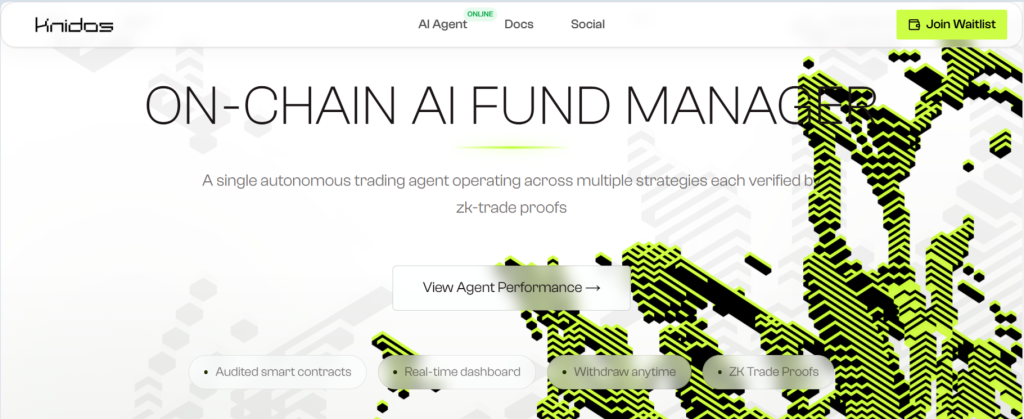
    The latest testnet attracting attention from airdrop hunters is Knidos, an ambitious project building what it describes as an on-chain AI fund manager powered by autonomous trading agents and cryptographic trade verification.

    Unlike typical testnet campaigns that focus solely on wallet interactions, Knidos combines AI-driven asset management, gamified engagement, Activity Points (AP), daily quests, and leaderboard progression into a single ecosystem.

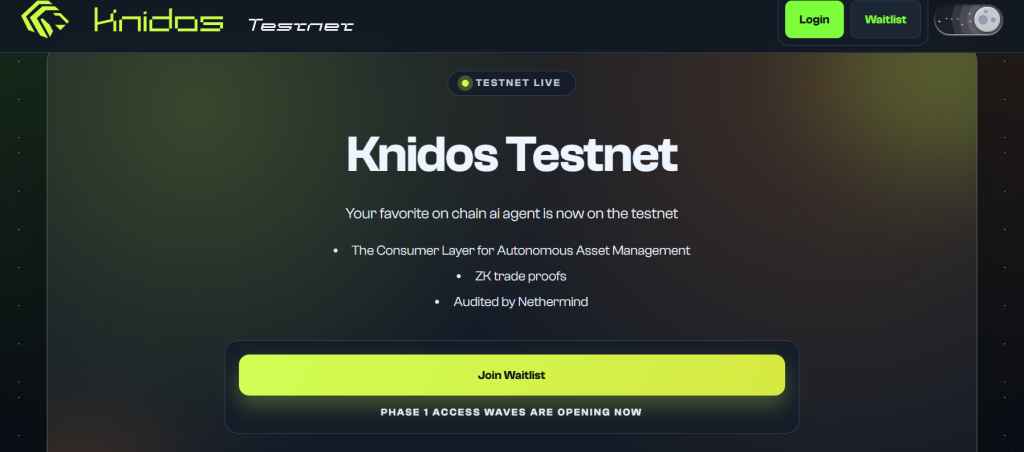
    While no official token launch or airdrop has been confirmed, the project has already launched its public testnet, giving early users an opportunity to earn AP and establish on-chain activity ahead of future developments.

    What Is Knidos?

    According to the official website, Knidos is building an autonomous AI fund manager capable of deploying capital across multiple investment strategies, including yield optimization and funding rate arbitrage. The protocol’s most notable innovation is its use of ZK Trade Proofs, a cryptographic system designed to verify trading activity without exposing proprietary strategies or sensitive trade data.

    Knidos

    The project is supported by ecosystem partners including Avalanche, xVentures, and zkVerify, while its smart contracts have been independently audited by Nethermind.

    Useful links:

    What Are Activity Points (AP)?

    The Knidos testnet revolves around a points-based reward system known as Activity Points (AP).

    Users earn AP by:

    • Completing onboarding missions
    • Finishing social quests
    • Maintaining login streaks
    • Playing testnet games
    • Progressing through the leaderboard
    • Claiming badges
    • Referring friends
    • Completing testnet interactions across supported networks

    Although Knidos has not announced how AP may be used in the future, similar systems have frequently been used by crypto projects to determine eligibility for community rewards and token distributions.

    Step 1: Join the Knidos Testnet

    Head to the official testnet portal:

    https://testnet.knidos.xyz/

    Connect your wallet and complete your profile setup.

    The onboarding process takes only a few minutes and unlocks access to missions, badges, games, referrals, and the leaderboard.

    If registration requires an invite code, you can usually obtain one through the project’s Discord community.

    Knidos testnet

    Step 2: Complete Profile Setup

    Your first AP rewards come from basic onboarding actions.

    Make sure to:

    • Create a profile
    • Connect social accounts
    • Complete onboarding prompts
    • Review the tutorial

    These early tasks are among the easiest sources of AP and help unlock additional progression within the testnet ecosystem.

    Step 3: Complete All Available Social Missions

    The dashboard includes several introductory missions designed to familiarize users with the ecosystem.

    Current tasks include:

    • Follow Knidos on X
    • Join Discord
    • Join Telegram
    • Read project documentation
    • Complete onboarding activities

    These missions are quick to complete and immediately contribute to your AP balance.

    Step 4: Stay Active in Discord

    Many successful airdrop campaigns reward community participation rather than simple registration.

    The Knidos Discord is currently the primary hub for:

    • Testnet announcements
    • Invite code distribution
    • Community discussions
    • New mission releases

    Remaining active, helping new users, and participating in discussions may become valuable signals as the ecosystem grows.

    Step 5: Build Daily Streaks

    One of the easiest ways to increase your AP balance is through activity streaks.

    The platform currently tracks:

    • 3-Day Streak
    • 7-Day Streak
    • 30-Day Streak

    This structure encourages long-term participation and rewards consistency rather than one-time engagement.

    Missing several days could slow down your overall progression compared to more active participants.

    Step 6: Play the Candle Climber Game

    Knidos includes a gamified experience called Candle Climber.

    The game resembles classic vertical platform games and allows users to earn additional AP through daily participation.

    While many users focus only on missions, these smaller activities often contribute to overall leaderboard positioning.

    Since the game requires only a few minutes per day, it makes sense to include it in your regular testnet routine.

    Step 7: Claim Faucet Assets

    To interact with testnet functionality, users can claim free faucet assets.

    Available assets currently include:

    • Testnet USDC
    • Testnet AVAX

    The platform supports testing across Avalanche Fuji and additional supported environments. These assets have no monetary value and are intended exclusively for testnet interactions.

    Step 8: Explore the AI Agent Section

    The most important part of the ecosystem is the Agent section.

    This is where users can begin interacting with the infrastructure that Knidos is ultimately building: an autonomous AI-powered asset management system designed to execute strategies, optimize yield, and manage capital across multiple opportunities.

    Projects often prioritize users who actively test product functionality rather than simply completing social tasks, making this one of the most important areas of the platform to explore.

    Step 9: Climb the Leaderboard

    Every completed action contributes toward your overall standing.

    To maximize AP:

    • Complete every available mission
    • Maintain login streaks
    • Play Candle Climber daily
    • Claim faucet assets
    • Test agent functionality
    • Earn badges
    • Participate in Discord
    • Invite friends

    The leaderboard provides a visible measure of participation and may become increasingly important as the testnet evolves.

    Is a Knidos Airdrop Confirmed?

    No.

    At the time of writing, Knidos has not officially announced a token generation event or guaranteed airdrop.

    However, the project’s AP-based progression system, leaderboard structure, referral mechanics, badges, daily engagement rewards, and testnet activity tracking closely resemble previous campaigns that eventually rewarded early participants.

    As always, users should participate because they are interested in the ecosystem and not because they expect guaranteed rewards.

    cryptoincomehub airdrop crypro

    Final Thoughts

    Knidos is not trying to build another simple DeFi dashboard.

    The project is attempting to create an AI-powered asset management layer where trading activity can be verified through zero-knowledge proofs while remaining private. Whether that vision succeeds remains to be seen, but the current testnet already offers multiple ways for early users to earn AP and engage with the ecosystem.

    For airdrop hunters looking for a fresh opportunity beyond the usual social farming campaigns, Knidos is worth adding to the watchlist.

  • DAC Quantum Chain Testnet Airdrop Guide 2026: How to Earn QE Points

    DAC Quantum Chain Testnet Airdrop Guide 2026: How to Earn QE Points

    DAC Quantum Chain is gaining attention as a new Layer 1 testnet campaign built around a post-quantum security narrative. The project describes itself as a quantum-proof blockchain, with a dual-token ecosystem involving DACT and DACC, and a public testnet experience where users can earn Quantum Energy, or QE points, by completing tasks.

    The campaign is currently centered around the DAC Inception Testnet, where users can connect a wallet, claim badges, complete on-chain and social tasks, use the faucet, climb the leaderboard, and collect QE points. Third-party airdrop trackers describe the campaign as an active testnet opportunity where users can earn badges, multipliers, faucet DACC, and QE through multiple activities.

    There is one important point to keep clear: DAC has a live testnet and rewards-style points system, but a final token allocation or guaranteed airdrop value should not be treated as confirmed unless the project publishes exact rules. Some community trackers discuss a potential airdrop, while other coverage notes that no formal TGE or final airdrop distribution has been confirmed.

    What Is DAC Quantum Chain?

    DAC Quantum Chain is a Layer 1 blockchain project focused on quantum-resistant infrastructure. Its website presents the ecosystem around two assets: DACT, an Ethereum-based token with a 1 billion supply, and DACC, the native blockchain currency used for transactions, smart contract execution, and node rewards.

    The project’s broader positioning is about building blockchain infrastructure for the post-quantum era. That includes security for digital assets, real-world assets, DeFi, AI applications, and data systems. Coverage of the Inception testnet describes DAC as using a claimed Proof of Quantum Work model and Quantum Entropy, although those technical claims should be evaluated carefully until independent audits and deeper technical verification are available.

    For airdrop farmers, the attraction is more practical: the testnet is live, the dashboard has points and badges, and users can build early participation history before the project moves further toward mainnet.

    Why Airdrop Farmers Are Watching DAC

    The DAC campaign has several ingredients that usually attract early users.

    First, it is still early. Testnet campaigns are valuable because users can often participate before the crowd arrives and before reward rules become crowded or diluted.

    Second, the activity structure is clear enough to follow. The Inception Testnet includes wallet onboarding, faucet claims, badges, social tasks, on-chain actions, referrals, and leaderboard progress. AirdropAlert describes the campaign as a shift from pre-launch access into an active testnet phase where users stack QE, earn badges, and climb the leaderboard.

    Third, DAC uses multipliers. The Gold Early Badge has been promoted as giving a temporary multiplier, while Q-CHIP and Keycard holders may receive higher QE boosts according to third-party campaign descriptions.

    That makes timing important. If a multiplier window is active, early users may get better efficiency from the same amount of work.

    How to Join the DAC Inception Testnet

    The main campaign entry point is the DAC Inception portal. Users can sign in with a wallet, email, or passkey depending on the available onboarding options. Community guides and trackers describe this as the main dashboard for earning QE points and completing testnet activities.

    A basic setup looks like this:

    1. Visit the official DAC website.
    2. Open the Inception Testnet portal.
    3. Sign in with a supported method.
    4. Connect an EVM-compatible wallet if using wallet login.
    5. Claim any available early badge or multiplier.
    6. Start completing faucet, social, and on-chain tasks.

    The safest approach is to start from official DAC domains and avoid random mirror links. Airdrop campaigns attract impersonators fast, especially when points and badges are involved.

    How QE Points Work

    QE stands for Quantum Energy, and it appears to be the core activity metric inside the DAC testnet campaign. Users earn QE by completing tasks and interacting with the testnet environment. Third-party campaign listings describe QE as being earned through on-chain actions, off-chain tasks, faucet participation, referrals, Quantum Crates, DACC burns, and staking-related pool activity.

    The important thing is that QE is not the same as a guaranteed token payout. It is a testnet points metric. It may become important later, but users should wait for official DAC rules before assuming a fixed conversion into tokens.

    Claim the Early Badge

    One of the first things users should check is the badge section inside the testnet dashboard.

    The campaign has promoted early badge windows, including a Gold Early Badge that may provide a temporary multiplier. AirdropAlert notes that Q-CHIP and Keycard holders may receive a 1.5x QE multiplier, while other users may receive 1.2x during the active Gold Badge window.

    This makes badges more than cosmetic. They may improve farming efficiency during the campaign, especially if multipliers apply to future activity.

    Use the DAC Faucet

    The faucet is another core testnet action.

    Users can claim testnet DACC, which is needed for testnet interactions. AirdropAlert states that the faucet gives 1 DACC every 8 hours, while other trackers also describe faucet use as part of the basic farming flow.

    The purpose of faucet DACC is to let users test the network. These testnet assets are not real funds and should not be bought or sold as valuable tokens.

    A smarter strategy is to claim the faucet regularly, then use those tokens for dashboard tasks and on-chain activity.

    Complete Social Tasks

    The campaign also includes off-chain tasks.

    These may include verifying an email, linking an X account, following the project’s official profile, joining community channels, or completing other dashboard-based actions. Social tasks are usually simple, but they can still matter because they prove user participation beyond raw transactions.

    For early-stage testnets, this type of hybrid activity can be useful. A wallet that only claims faucet once may look weak. A user who completes social tasks, collects badges, and returns regularly usually builds a better participation profile.

    cryptoincomehub airdrop crypro

    Complete On-Chain Tasks

    The on-chain side is where users build more durable testnet history.

    Tasks may include:

    • claiming faucet DACC;
    • completing dashboard missions;
    • interacting with testnet modules;
    • using pool mechanics;
    • depositing or withdrawing inside supported testnet features;
    • and repeating daily or streak-based actions.

    Community guides mention a “First Drip” style faucet task, daily streaks, and activity sections that track QE, ranking, and task progress. Airdrop trackers also describe on-chain quests and badge-based progress as part of the DAC Inception testnet structure.

    The best farming style is steady rather than spammy. Repeated activity over several days or weeks usually looks stronger than one intense session followed by silence.

    Use the QE Pool Carefully

    The campaign also references a pool mechanic where users can exchange or burn DACC for QE. AirdropAlert describes a QE Pool where burning DACC can generate QE at a rate of 1 DACC = 1,000 QE, while staking DACC may allow users to earn QE from future burns.

    This can be a useful farming path, but users should understand the mechanic before using it. If a burn action is irreversible, do not click through casually. Even on testnet, the goal is to learn the system and build activity, not blindly burn every faucet token without understanding what the dashboard is tracking.

    Referrals and Leaderboard Activity

    DAC also appears to reward referrals. AirdropAlert says users can earn 250 QE + 1 DACC for each verified referral, with referral activity helping users push higher on the leaderboard.

    Referral systems can help, but they should not replace real activity. A strong profile usually combines several signals:

    • badge collection;
    • faucet claims;
    • social verification;
    • on-chain actions;
    • daily streaks;
    • pool activity;
    • and referrals.

    That mix looks more natural than relying on one category alone.

    cryptoincomehub airdrop crypro

    Is the DAC Airdrop Confirmed?

    This needs careful wording.

    The testnet campaign is live, and the points/badge system is real. However, a final token allocation, claim date, or guaranteed payout formula has not been clearly confirmed in the strongest official sources reviewed. OurCryptoTalk specifically notes that no formal airdrop or TGE has been confirmed, even though community trackers treat DAC as a potential airdrop opportunity based on QE, badges, and leaderboard activity.

    That means DAC should be treated as a potential airdrop farm, not a guaranteed free-token event.

    Risks to Keep in Mind

    DAC has a stronger narrative than many random testnets, but users should still stay grounded.

    The main risks are:

    • no guaranteed token allocation;
    • unclear final QE conversion rules;
    • possible campaign changes;
    • heavy competition if the testnet goes viral;
    • and uncertainty around the project’s quantum-security claims until more technical validation is available.

    OurCryptoTalk also notes that DAC’s quantum-proof claims still need independent audits and deeper technical disclosure. That is a fair caution for readers who are evaluating the project beyond airdrop farming.

    Final Thoughts

    DAC Quantum Chain is a testnet worth watching in 2026 because it combines three things airdrop farmers care about: early access, a visible points system, and repeatable activities. The Inception Testnet gives users a clear way to earn QE, collect badges, claim faucet DACC, complete tasks, and build participation history.

    The opportunity is not guaranteed. But for users who like early Layer 1 testnets, DAC offers a structured campaign with enough moving parts to justify consistent activity.

    The smartest approach is simple: join through official links, claim badges early, complete daily tasks, use the faucet, build QE steadily, and avoid assuming that points automatically equal future profit.

    FAQ

    What is DAC Quantum Chain?

    DAC Quantum Chain is a Layer 1 blockchain project focused on quantum-resistant infrastructure, with a dual-token ecosystem involving DACT and DACC.

    What is the DAC Inception Testnet?

    The DAC Inception Testnet is the project’s active testnet campaign where users can earn QE points, badges, multipliers, and leaderboard progress through social and on-chain activity.

    What are QE points?

    QE points, or Quantum Energy, are the core activity points inside the DAC testnet campaign. Users can earn them through faucet claims, tasks, referrals, badges, pool activity, and other testnet actions.

    Is the DAC airdrop guaranteed?

    No final token allocation or TGE has been officially confirmed in the strongest sources reviewed. The live testnet and reward system are real, but a final airdrop should still be treated as speculative.

    How often can users claim faucet DACC?

    AirdropAlert describes the faucet as giving 1 DACC every 8 hours during the campaign. Users should verify the current faucet rules inside the official testnet dashboard.

    What is the best way to farm DAC?

    The best strategy is consistent activity: claim faucet DACC, complete social and on-chain tasks, collect badges, build daily streaks, use the QE Pool carefully, and monitor leaderboard progress.

  • Jupiter Airdrop 2026: How to Check Eligibility, Claim JUP, and Avoid Scams

    Jupiter Airdrop 2026: How to Check Eligibility, Claim JUP, and Avoid Scams

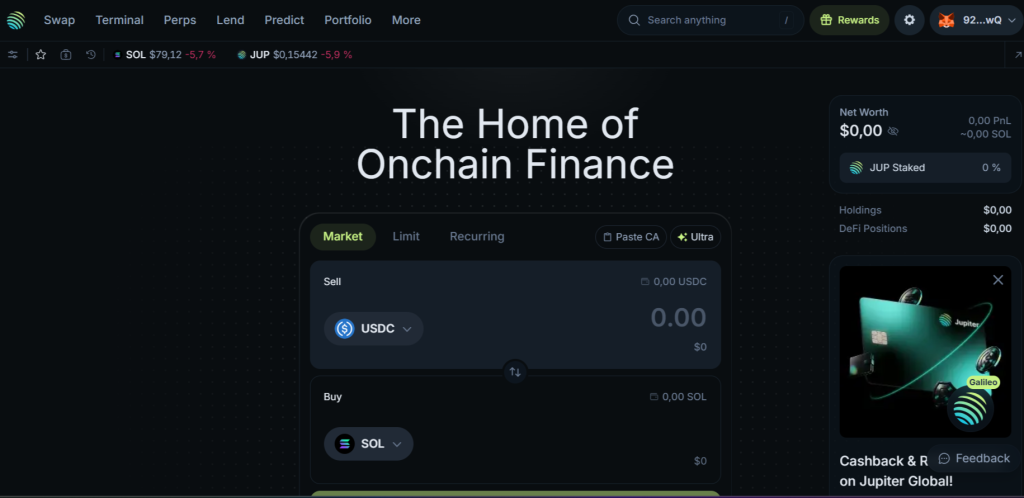
    Jupiter remains a core piece of Solana DeFi. It started as the network’s leading swap aggregator, but it has grown into a broader trading and governance ecosystem with routing, recurring orders, perpetuals, portfolio tools, and staking-linked community rewards. That is exactly why every new JUP distribution gets attention fast.

    In 2026, the big opportunity is not blindly connecting a wallet to random “instant claim” pages. The real edge is knowing which Jupiter reward programs are official, which eligibility rules are public, and where claims actually happen. Jupiter’s official support pages now document both Jupuary 2026 criteria and Active Staking Rewards claim flows, which gives users a much clearer framework than rumor-driven airdrop hunting. (support.jup.ag)

    That also means something else: any page telling users to simply connect a wallet, wait a couple of minutes, and receive free JUP automatically should be treated with extreme caution. Jupiter has official claim surfaces and official support documentation. Anything outside those routes deserves scrutiny first.

    jup.ag

    What the Jupiter Airdrop in 2026 Actually Looks Like

    The Jupiter reward story in 2026 is not a mystery box anymore. There are two clear buckets users need to understand.

    The first is Jupuary 2026, which Jupiter’s support center describes with a published allocation framework. The initial breakdown includes 200 million JUP for distribution, split into 170 million for fee-paying Jupiter users and 30 million for JUP stakers. On top of that, Jupiter says 200 million JUP is reserved as a bonus pool for users who hold or stake the airdrop through 2026, and 300 million JUP is set aside for Jupnet incentives. The eligibility window for fee-paying users ended on January 30, 2026.

    The second bucket is Active Staking Rewards, or ASR. Jupiter’s official rewards documentation says ASR is a quarterly system designed to reward voting activity and community participation, while the vote portal states that 50 million JUP is distributed to eligible stakers each quarter. (Jupiter Rewards)

    So the right way to think about “the Jupiter airdrop” in 2026 is not as one random giveaway. It is a structured reward environment inside the Jupiter ecosystem.

    Where to Check Jupiter Eligibility

    Jupiter already has official tools for this.

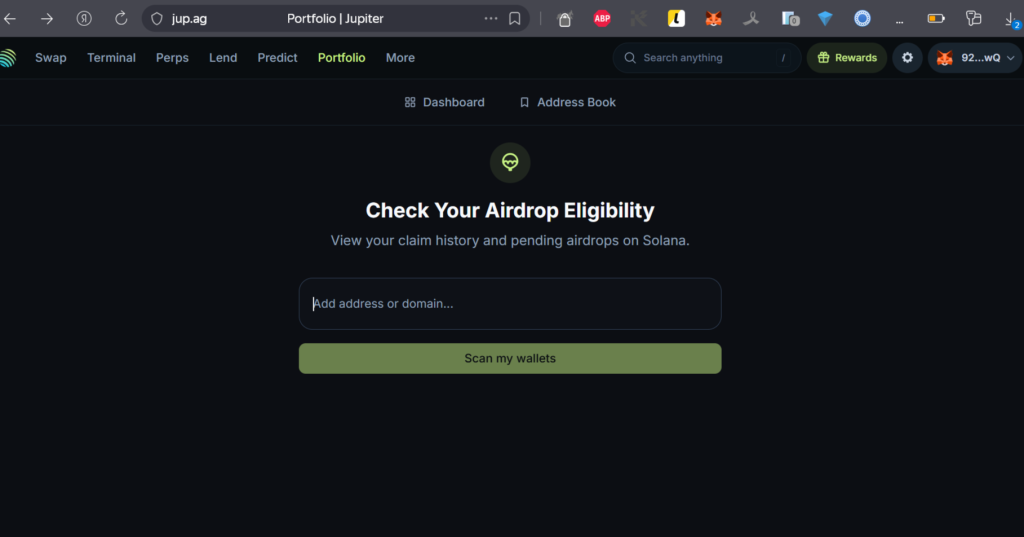
    For wallet-based airdrop discovery, Jupiter provides an Airdrop Checker that lets users review upcoming and past airdrops across wallets. That is the cleanest starting point if the goal is to check whether a Solana wallet has reward exposure.

    For Jupuary-specific questions, Jupiter’s official Support Center has a dedicated Participation and Eligibility section, including the criteria page for Jupuary 2026.

    For staking-linked rewards, the correct path is different. Jupiter’s support documentation says ASR claims go through the official voting wallet flow, and eligible users should connect the voting wallet when claims are live to see available rewards and claim them.

    That distinction matters. Different reward types use different official surfaces.

    jup.ag

    How to Claim JUP Rewards Safely

    If a user is eligible, the safe process is simple.

    For ASR, Jupiter support says users should connect the voting wallet to the official ASR claim flow when claims are open. Jupiter’s vote site also states that when rewards become available, they can be claimed at the rewards area, and that unclaimed ASR is eventually returned to the community treasury after the claim period ends. (Jupiter ASR claim guide)

    For broader Jupiter reward and claim activity, Jupiter’s official claim portal and reward surfaces are already live, which is exactly why users should not rely on unofficial “instant credit” pages. Real Jupiter claims are tied to official ecosystem pages and published support instructions, not vague third-party steps.

    The important point is this: official eligibility should show up through official Jupiter tools. Users should not have to guess.

    Can Users Really Get Up to $20,000 in JUP?

    Large allocations are possible for some users, but any fixed claim like “connect now and get up to $20,000” should be treated as marketing, not as a default outcome.

    Jupiter has publicly documented reward categories and allocation pools, but individual payouts depend on actual eligibility, fee-paying behavior, staking, voting, and the specific reward program involved. The official criteria page explains the allocation structure for Jupuary 2026, but it does not promise a flat amount to any wallet that simply connects.

    That means a genuine Jupiter reward can absolutely be valuable, especially for active Solana users. But the amount is not something a random page can truthfully guarantee in advance without showing the actual wallet’s eligibility inside the official Jupiter environment.

    The Biggest Red Flag in Fake Jupiter Airdrop Promotions

    The classic scam pattern is always the same: urgency, easy money, and a vague instruction to connect a wallet.

    Cybersecurity coverage around fake Jupiter reward campaigns shows exactly this behavior. Security researchers have documented “Jupiter rewards” and “Jupiter airdrop” scams that impersonate Jupiter branding, lure users into connecting wallets, and then attempt to drain assets. More broadly, crypto security guides warn that fake airdrops often rely on wallet connection prompts and malicious smart contract approvals to steal funds. (enigmasoftware.com)

    So if a page tells users:

    • just connect a wallet,
    • wait a couple minutes,
    • and tokens will appear automatically,

    that should immediately lower trust.

    Legitimate Jupiter rewards use official claim surfaces, published eligibility criteria, and support documentation. They do not need a mystery process.

    cryptoincomehub

    What Actually Improves Jupiter Reward Eligibility

    The official criteria page for Jupuary 2026 gives the clearest answer here.

    Jupiter explicitly says the initial Jupuary 2026 distribution is aimed at fee-paying users and JUP stakers. Meanwhile, ASR is tied to voting activity, staking, and broader governance participation. In plain English, the strongest reward profile in the Jupiter ecosystem comes from actual use and actual involvement.

    That means users trying to improve future Jupiter reward exposure should focus on:

    • using Jupiter products naturally,
    • paying real fees through actual platform activity,
    • staking JUP,
    • and staying active in governance where relevant.

    That is a much stronger strategy than chasing fake one-click claim pages.

    Why Jupiter Still Matters for Solana Users

    Even outside the airdrop angle, Jupiter remains central to the Solana trading stack.

    Its official pages position Jupiter as a broad on-chain finance hub, not just a swap tool. That matters because ecosystems with real usage tend to support more durable reward systems than projects that exist only for speculation. Jupiter’s expansion into governance, staking incentives, recurring reward programs, and portfolio tooling is exactly why users keep watching it closely.

    This is also why fake Jupiter airdrop promotions work at all: they borrow the credibility of a platform people already trust.

    Final Thoughts

    The Jupiter airdrop story in 2026 is real, but it is structured, not magical.

    There are official reward paths. There are official eligibility rules. There are official claim flows. Jupiter’s Support Center and reward pages already give users enough information to separate real opportunities from the usual wallet-drainer nonsense. (Jupiter Support)

    So the smart move is not to chase every post promising free JUP in minutes. It is to check eligibility through Jupiter’s official tools, claim only through official Jupiter routes, and treat any “instant token credit” pitch like a potential trap.

    FAQ

    Is the Jupiter airdrop real in 2026?

    Yes, Jupiter has official reward programs in 2026, including Jupuary 2026 allocations and quarterly Active Staking Rewards. (Jupiter Support)

    How do I check Jupiter airdrop eligibility?

    Use Jupiter’s official Airdrop Checker and the Jupiter Support Center participation and eligibility pages.

    Where do I claim ASR rewards?

    Jupiter support says ASR claims are made through the official voting wallet flow when claims go live.

    Does Jupiter guarantee up to $20,000 in JUP for every wallet?

    No. Reward size depends on actual eligibility, staking, fee-paying activity, and the specific Jupiter reward program. Jupiter’s official criteria describe allocation pools, not guaranteed amounts for every connected wallet.

    What is the biggest Jupiter airdrop scam warning sign?

    Any site that tells users to connect a wallet and wait for automatic token credit without showing official eligibility through Jupiter’s own tools should be treated as suspicious. Security researchers have documented fake Jupiter reward scams built around that exact pattern. (enigmasoftware.com)

  • Pudgy Penguins PENGU Airdrop 2026: How to Check Eligibility and Avoid Fake Claim Pages

    Pudgy Penguins PENGU Airdrop 2026: How to Check Eligibility and Avoid Fake Claim Pages

    Pudgy Penguins is no longer just a popular NFT collection. Since launching in 2021, it has grown into one of the strongest consumer brands in Web3, with digital collectibles, merchandise, toys, Pudgy World, and a wider community built around its penguin IP. Its retail expansion has also gone far beyond crypto-native users, with Pudgy Penguins toys reaching thousands of Walmart stores in the United States.

    That brand growth is exactly why the PENGU token attracts so much attention. Pudgy Penguins describes PENGU as the token of the Pudgy Penguins ecosystem, giving its global community a way to align with the brand’s story and future. The official PENGU page also allows users to check whether PENGU tied to Big Pudgy, Lil Pudgy, or Rog token IDs has already been claimed.

    But this is also where users need to be careful. Any page promising thousands of dollars in PENGU just for connecting a wallet should be treated as suspicious unless it is clearly connected to the official Pudgy Penguins ecosystem. PENGU-related phishing pages and fake claim campaigns have already been reported, including scams that mimic Pudgy branding and attempt to drain wallets through malicious approvals.

    What Is Pudgy Penguins?

    Pudgy Penguins is a Web3-born brand built around an NFT collection and a broader consumer ecosystem. The project describes itself as a brand focused on creativity, freedom, community, toys, merchandise, digital collectibles, and entertainment experiences.

    The original Pudgy Penguins NFT collection launched in July 2021 and became one of the most recognizable NFT communities in the market. Since then, the brand has expanded into physical toys, licensing, games, and mainstream retail distribution. This expansion helped Pudgy Penguins stand out in a market where many NFT projects struggled to move beyond profile pictures.

    What Is PENGU?

    PENGU is the official token connected to the Pudgy Penguins ecosystem. The project describes it as a token for the broader Pudgy Penguins community, built around the brand’s culture, visibility, and global audience.

    The official PENGU page also includes a checker where users can enter a Big Pudgy, Lil Pudgy, or Rog token ID to see whether the related PENGU has already been claimed. That is an important detail because it gives users a project-controlled place to verify claim status instead of relying on random links.

    Is There an Official PENGU Claim Page?

    Yes, the official claim page appears at claim.pudgypenguins.com. The page describes PENGU as a way for Pudgy Penguins fans and the wider audience to align themselves with the character and join “The Huddle.”

    Users should treat this official domain as the baseline. If a different site claims to offer a PENGU airdrop, especially one with a lookalike URL or aggressive “claim now” messaging, it needs to be verified through official Pudgy Penguins channels before any wallet connection happens.

    Why Fake PENGU Airdrop Pages Are Dangerous

    Fake crypto airdrop pages usually follow a familiar pattern. They promise a large reward, create urgency, ask users to connect a wallet, and then push the user into signing a malicious transaction or approval.

    PENGU has already attracted this type of scam activity. Security coverage has documented fake Pudgy Penguins reward pages that impersonate the project and attempt to drain wallets after users authorize malicious contract interactions. Other reporting has also described fake PENGU pages using sponsored placements, social posts, and lookalike domains to lure users into wallet-draining flows.

    That is why any claim that a user can simply connect a wallet and receive thousands of dollars in PENGU within minutes should be viewed with caution. Real claim eligibility should be checked through official Pudgy Penguins pages, not through random links.

    How to Check PENGU Eligibility Safely

    cryptoincomehub airdrop crypro

    The safer process is straightforward:

    1. Start from the official Pudgy Penguins website.
    2. Use the official PENGU page to review token-related information.
    3. Use the official PENGU claim page only if you are checking or claiming through Pudgy-controlled infrastructure.
    4. Avoid sponsored search results, shortened links, and unofficial “instant claim” websites.
    5. Never enter a seed phrase or private key on any claim page.

    That last point is non-negotiable. No real airdrop claim requires a seed phrase.

    Who Was Most Likely Eligible for PENGU?

    Historically, PENGU eligibility has been tied most closely to the Pudgy Penguins ecosystem itself. That includes holders or participants connected to Pudgy Penguins NFTs and related community assets. The official PENGU page specifically references Big Pudgy, Lil Pudgy, and Rog token IDs in its claim-status checker.

    Some third-party airdrop guides also discuss broader eligibility groups, but users should not treat those as final authority. The only eligibility result that matters is what the official Pudgy Penguins claim environment shows for the relevant wallet or token ID.

    The Biggest Red Flags to Watch For

    A fake PENGU claim page will often look polished. That is what makes it dangerous.

    Common red flags include:

    • a URL that is close to the official domain but not exact;
    • promises of a fixed dollar amount for every wallet;
    • pressure to claim immediately;
    • requests for wallet approvals that do not make sense;
    • seed phrase or private key requests;
    • a claim page promoted only through replies, DMs, or sponsored ads.

    Security reports around PENGU scams show that attackers are already using impersonation and wallet-draining tactics. That means users should verify the domain before connecting anything.

    Is PENGU Still Worth Paying Attention To?

    Yes, but for the right reasons.

    PENGU is not just another random meme token attached to a dead NFT project. Pudgy Penguins has built a recognizable brand, expanded into retail, and maintained a strong community presence. The token gives that audience another way to engage with the ecosystem.

    That said, users should separate long-term interest in the Pudgy Penguins ecosystem from unsafe airdrop behavior. Buying, holding, claiming, or interacting with PENGU should always happen through verified sources and properly checked links.

    Final Thoughts

    The Pudgy Penguins PENGU ecosystem is real, the token is real, and the official claim infrastructure exists. But the scam risk around PENGU is also real. Fake claim pages are already using Pudgy Penguins branding to trick users into connecting wallets and signing dangerous transactions.

    The safest approach is simple: use only official Pudgy Penguins links, check claim status through the official PENGU page or claim portal, and ignore any site promising automatic high-value rewards after a basic wallet connection.

    In crypto, a real airdrop can be valuable. One bad signature can be more expensive than missing it.

    FAQ

    What is PENGU?

    PENGU is the official token of the Pudgy Penguins ecosystem, designed for the project’s broader community and brand audience.

    Where is the official PENGU claim page?

    The official claim page is claim.pudgypenguins.com. Users should verify the exact domain before connecting a wallet.

    Is every Solana wallet eligible for PENGU?

    No. There is no reliable evidence that every active Solana wallet automatically qualifies. Eligibility should be checked through official Pudgy Penguins claim tools.

    Are fake PENGU airdrops common?

    Yes. Fake PENGU reward and claim pages have been reported, including scams using lookalike domains and wallet-draining flows.

    Should I connect my wallet to a PENGU claim page?

    Only if you have verified that the page is official. Start from pudgypenguins.com or claim.pudgypenguins.com and avoid random links.

  • Arc Testnet Airdrop 2026: How to Start Farming Early

    Arc Testnet Airdrop 2026: How to Start Farming Early

    Arc has become one of the more interesting testnet opportunities in 2026 for a simple reason: it is not a random anonymous chain. Arc is Circle’s stablecoin-native Layer 1, and Circle officially launched the Arc public testnet in October 2025. Circle describes Arc as purpose-built for stablecoin finance, with USDC-native gas fees, sub-second finality, and a design aimed at financial applications.

    That combination gives Arc a stronger setup than the average testnet farm. Users are not just clicking through a bare faucet. They are getting familiar with a live public testnet tied to the company behind USDC, while Circle is already positioning Arc as infrastructure for tokenized assets, payments, and onchain financial workflows.

    There is still one important boundary to keep clear: I could verify the Arc public testnet, Circle’s involvement, the explorer, and the faucet, but I could not verify an official Arc airdrop announcement. So the right framing is not “guaranteed free token.” The right framing is “early testnet participation in a serious ecosystem that may reward meaningful early usage later.”

    What Arc Actually Is

    Circle officially introduced Arc as an open Layer 1 blockchain designed for stablecoin finance. In its own description, Arc is built with native USDC and USYC support, predictable gas fees in USDC, and infrastructure intended for payments, settlement, and tokenized financial use cases. Circle later announced the Arc public testnet, describing it as a launch involving major financial and infrastructure partners.

    That is what makes Arc different from a generic testnet rumor. The chain already has:

    • an official website,
    • a public testnet,
    • a live explorer,
    • a faucet,
    • and an ecosystem directory that is beginning to form around it.

    Why Arc Is Getting So Much Attention

    Arc is getting attention because Circle is not a small player. Circle is the company behind USDC, and Arc is explicitly being built around stablecoin-native financial infrastructure. Circle’s press release on the public testnet says early ecosystem participants include firms across payments, asset management, banking, and blockchain infrastructure. Public reporting at launch also highlighted names such as Visa, BlackRock, Goldman Sachs, and Coinbase as part of the broader ecosystem conversation around Arc.

    That does not automatically translate into an airdrop.

    It does mean Arc has the kind of institutional weight and ecosystem depth that make early testnet participation more meaningful than usual.

    How to Start Farming the Arc Testnet

    The cleanest approach is to use only official Arc surfaces and live ecosystem apps.

    1. Open the Official Arc Site

    Start at the official Arc website. The site confirms that Arc is currently in public testnet and links out to ecosystem resources.

    2. Use the Official Explorer

    Arc has public explorer access through Blockscout-style explorer surfaces, including the official Arc testnet explorer. This gives users a way to verify transactions, addresses, and network activity while interacting with the chain.

    3. Claim Faucet Assets

    Circle’s official public testnet announcement and Arc ecosystem surfaces include a faucet route for testnet usage. The uploaded text also describes faucet usage for testnet USDC and EURC, and that aligns with the broader Arc testnet design where stablecoins play a central role in the network.

    Because this is a testnet environment, these assets do not have real market value. Their purpose is to let users interact with the network and ecosystem safely.

    4. Interact With Early Ecosystem Apps

    This is where the real testnet farming begins.

    The uploaded text lists early dApp interactions such as InfinityName, OmniHub, and ZK Codex, plus basic wallet transfers as ways to generate onchain activity. I could verify that Arc has a live ecosystem hub and that the testnet ecosystem is growing, though exact app availability can change quickly. That means users should always check the current ecosystem directory and confirm which apps are live before relying on an older guide.

    5. Repeat Activity Over Time

    The biggest edge in testnet farming is rarely one transaction. It is repeated, natural-looking activity across multiple sessions.

    That is exactly why Arc is interesting now. The public testnet launched in late October 2025, which means it is still early enough for consistent users to build a longer activity history before mainnet.

    What Makes Arc Different From Most Testnets

    Arc has two traits that stand out.

    First, it is stablecoin-native. Circle’s own materials say Arc uses USDC for predictable gas fees and is designed around stablecoin finance from day one. That is a much more specific value proposition than the usual “fast modular chain” marketing language.

    Second, Arc has a more institutional posture than most testnets. Circle framed the public testnet launch around real financial use cases and participation from major institutions and infrastructure firms. Whether or not that eventually leads to a token, it gives the network more gravity than a typical community-only testnet.

    cryptoincomehub airdrop crypro

    How to Farm Arc More Intelligently

    The smartest Arc strategy is simple:

    • use the faucet when available,
    • interact with several ecosystem apps rather than one,
    • make basic transfers,
    • revisit the network periodically,
    • and keep an eye on newly launched ecosystem dApps.

    What you should not do is pretend this is risk-free alpha just because testnet assets are free. There is still an opportunity cost in time, and there is still the chance that no token reward ever arrives. The value here is early positioning in a serious network, not guaranteed payout.

    Risks and Reality Check

    Arc looks credible. That does not mean every claim around it is credible.

    Here is the clean split:

    • verified: Circle launched Arc public testnet; Arc has a stablecoin-native L1 design; the ecosystem is forming; the testnet is live.
    • not verified by official sources I found: a confirmed Arc token airdrop, guaranteed token allocation for testnet users, or a published tokenomics plan for a future ARC governance token.

    That means readers should farm Arc for the right reason: because it is early and credible, not because someone promised free money.

    Final Thoughtscryptoincomehub airdrop crypro

    Arc is shaping up as one of the more credible testnet opportunities in 2026. Circle has already launched the public testnet, the network has live infrastructure, and the ecosystem is starting to fill out with real builders and major financial names around it.

    That is enough to make Arc worth exploring.

    Just keep the thesis clean. The official opportunity today is early testnet participation. Anything beyond that, especially guaranteed airdrop language, is still speculation until Circle or Arc says otherwise.

    FAQ

    Is Arc really built by Circle?

    Yes. Circle officially introduced Arc and later announced the Arc public testnet.

    Is Arc live in 2026?

    Arc is live in public testnet, not mainnet.

    Does Arc have a faucet?

    Yes, Arc’s public testnet ecosystem includes faucet access for testnet usage.

    Is there an official Arc airdrop?

    I could not verify an official airdrop announcement from Circle or Arc. Current airdrop talk appears speculative.

    Why are users farming Arc anyway?

    Because it is an early public testnet tied to Circle, USDC, and a stablecoin-native L1 narrative with serious ecosystem backing.

  • Variational Airdrop 2026: Why Traders Think It Could Be Massive

    Variational Airdrop 2026: Why Traders Think It Could Be Massive

    The next huge crypto airdrop may not come from a Layer 2 network or a flashy new DeFi app.

    It may come from a perpetual DEX that is quietly gaining traction while much of the market is focused elsewhere.

    That is exactly why Variational is starting to attract serious attention in 2026. The protocol positions itself as infrastructure for peer-to-peer derivatives trading, with products including Omni for perpetuals and Pro for more customizable derivatives workflows.

    For airdrop hunters, that matters.

    The biggest crypto airdrops rarely come from random projects with no traction. They usually come from protocols that are early, growing fast, product-driven, and strong enough to build a real user base before a token launch. Variational is beginning to fit that profile.

    So while nothing is guaranteed, the project is increasingly being discussed as a possible contender for one of the biggest crypto airdrops of 2026.

    Why Perpetual DEXs Are One of the Hottest Narratives in Crypto

    Perpetual DEXs have become one of the most important sectors in the market.

    The reason is simple. If more trading activity continues moving on-chain, decentralized perpetual exchanges could capture a meaningful share of that volume. That makes them one of the clearest long-term infrastructure plays in crypto.

    At the same time, they have also become one of the biggest centers of airdrop speculation.

    A large portion of current activity across perp DEXs is driven by users farming future rewards. Traders open positions, generate volume, interact with ecosystems, and build on-chain history because they expect those actions to matter later if a token launches.

    That creates both opportunity and risk.

    On the one hand, it means early users can potentially position themselves before the crowd. On the other hand, it also means some of the current volume may be temporary. Once an airdrop happens, many users move on to the next farm.

    The real question is not whether farming exists. It clearly does. The real question is which platforms can keep users after the incentives fade.

    That is where Variational starts to look more interesting than many people expect.

    What Is Variational?

    According to its documentation, Variational is a protocol built for peer-to-peer derivatives trading, and multiple applications are being developed on top of it, including Omni and Pro.

    It operates in the same broad arena as other perp DEXs, but it is trying to stand out through product efficiency rather than pure attention farming.

    One of the main products referenced by traders is Omni, the platform’s retail perpetual futures experience. Variational describes Omni as “the most rewarding place to trade perps,” highlighting no trading fees, tight spreads, and trader rewards such as loss refunds.

    That combination alone is enough to put it on the radar of serious traders.

    For airdrop hunters, it adds another layer: a platform that people genuinely use tends to have a far stronger reward narrative than one that only exists to farm points.

    Why Traders Are Talking About a Variational Airdrop

    The reason Variational is being discussed as an airdrop candidate comes down to a familiar pattern in crypto.

    Projects that launch strong products, attract meaningful usage, and delay tokenization often become prime speculation targets. Traders start asking the same questions:

    • Is there a token coming?
    • Will user activity matter?
    • Are early users building eligibility now?
    • Is the market still early enough to enter before rewards become diluted?

    That is the backdrop for the growing interest around Variational.

    There is no official confirmation in the material you sent that a Variational airdrop has been announced, and that should be stated clearly. What is confirmed is that the docs already include a dedicated token section for $VAR, which helps explain why the market is watching the project closely.

    And when that kind of speculation starts building around a real product, it usually does not happen by accident.

    The Biggest Selling Point: Zero Trading Fees

    If there is one feature driving the bullish case for Variational, it is this: no maker fees and no taker fees.

    That is a serious advantage in perpetual trading.

    Many users underestimate how destructive fees can be, especially for active traders using high-frequency strategies, short-term momentum setups, or small repeated entries and exits. On paper, the cost difference may look minor. In reality, fees can erase a profitable strategy faster than most people realize.

    That is why Variational’s model stands out.

    Variational’s documentation says Omni does not charge trading fees. The only listed platform fee is a 0.1 USDC deposit/withdrawal fee intended to reduce spam. The docs also say rewards such as loss refunds are funded through the platform’s structure rather than standard trading fees.

    Why Low Fees Could Matter More Than Hype

    A lot of crypto platforms try to win attention through marketing, branding, or incentives.

    Variational seems to be competing on something more sustainable: cost and usability.

    That may sound less exciting than a viral campaign, but it is often much more important. When traders find a platform that helps them keep more of their profits, they have a reason to stay even after the speculation cools down.

    This is a major point for anyone evaluating future airdrop quality.

    The best airdrops do not just reward random activity. They often emerge from ecosystems that were already useful before the token launched. If users are only there for the reward, the token often struggles once distribution ends. If users are there because the product is genuinely strong, the token has a far better chance of holding attention.

    That is one of the strongest arguments in Variational’s favor.

    How Variational’s Model Appears to Work

    Based on the project docs, Omni uses the Variational protocol for on-chain clearing while the Omni Liquidity Provider (OLP) acts as the sole market maker, providing quotes and serving as the trading counterparty. The docs say Omni generates revenue through OLP’s market making and keeps that spread revenue within the ecosystem, which is what enables zero fees, loss refunds, and other trader rewards.

    From a user perspective, the result is what matters most: a low-friction trading environment that feels cheaper than many alternatives.

    There is also a broader protocol layer behind it. Variational says its infrastructure is meant to automate booking, clearing, and settlement of derivatives trades on-chain, while supporting multiple applications rather than just one trading front end.

    If that architecture continues to scale, the platform’s model could become even more attractive as more traders move on-chain.

    Variational Is Growing in a Very Competitive Market

    The perp DEX market is not easy territory.

    This is one of the most crowded and combative sectors in crypto right now. Projects are fighting for market share, liquidity, brand visibility, and trading volume all at once.

    Variational appears to be taking a more restrained approach.

    Instead of trying to dominate attention through noise, the project’s official surfaces lean more heavily on product pages, docs, roadmap updates, release information, and support/community channels. Its official links page routes users to the website, docs, Discord, Telegram, GitHub, API reference, and social accounts rather than hype-heavy landing funnels.

    That quieter style may not create instant virality, but it often appeals to the kind of users who care more about execution than marketing.

    cryptoincomehub Airdrop

    The Reported Numbers Suggest Real Traction

    The transcript points to several growth metrics that make the project harder to dismiss as just another speculative narrative.

    The official Omni page currently highlights $175B+ total volume, $800M+ current open interest, and roughly 500 markets. Those are strong top-line indicators that the platform already has meaningful usage.

    That matters for two reasons.

    First, it suggests the platform already has measurable activity. Second, it suggests Variational is building that activity around a low-fee user proposition rather than a standard fee-heavy model.

    Critics may argue that revenue comparisons against other fee-charging venues will look different. That is fair. But a model built for scale can become much more powerful if open interest and user participation continue rising.

    Why the Bull Case Goes Beyond Current Volume

    The real upside case for Variational is not just about where the numbers are today.

    It is about where on-chain perpetual trading could be heading over the next few years.

    A lot of trading capital is still not fully on-chain. If decentralized execution keeps improving and more traders become comfortable with on-chain markets, the leading perp DEXs could eventually handle dramatically more volume than they do now.

    That is the long-term thesis.

    Under that scenario, a platform with low trading friction, strong product design, and a growing user base could scale much faster than the market currently expects. And if that scaling happens before a token launch, early users may be in a strong position if rewards are eventually distributed.

    That is why some traders are not just asking whether Variational is useful today. They are asking whether it could become one of the defining perp DEX winners of this cycle.

    The Loss Refund Feature Adds a Sticky User Experience

    Another detail that makes Variational more memorable is its gamified loss refund mechanic.

    Variational’s documentation says that when a user closes a losing trade on Omni, they can have up to a 5% chance to get the entire loss instantly refunded. The project presents this as one of the core benefits of trading on Omni.

    From a strict trading perspective, this does not change the importance of discipline or risk management. But from a user behavior standpoint, it is smart design.

    Gamification matters in crypto, especially on trading platforms.

    Features like this can turn a frustrating experience into a surprisingly positive one, which helps create emotional stickiness. In a space where users constantly move from one farm to another, even a small engagement edge can make a real difference.

    More Products Could Strengthen the Airdrop Thesis

    Another reason Variational is gaining attention is that the current product suite may not be the full picture.

    The project explicitly frames itself as a protocol supporting multiple apps, with Omni already live and Pro positioned for advanced traders and institutional-style customizable derivatives. Its roadmap also makes clear that development is ongoing and should be viewed as a living plan rather than a fixed promise.

    That is important because the strongest airdrop opportunities often come from protocols that evolve into broader platforms. A single-product app can generate interest, but a growing ecosystem creates more room for user participation, stronger reward mechanics, and more meaningful network effects.

    For airdrop hunters, that kind of roadmap matters.

    Could Variational Really Become One of the Biggest Airdrops of 2026?

    It is possible, and that is why the project is getting attention.

    The case rests on several factors:

    • it sits in one of the strongest narratives in crypto;
    • it already appears to have real usage;
    • it offers a clear product advantage through zero fees;
    • it has features that may help user retention;
    • and it still feels early compared with more saturated opportunities.

    That is the kind of setup that often attracts serious airdrop speculation.

    Of course, speculation is not confirmation. There is no guarantee of a token launch schedule, no guarantee of a retroactive distribution, and no guarantee that early activity will be rewarded the way users hope. But if the goal is to identify promising projects before the wider market fully prices them in, Variational clearly deserves attention.

    Risks and Reality Check

    It is easy to get carried away when a platform has both product momentum and airdrop buzz.

    Still, there are real risks.

    Volume in perp DEXs can be distorted by farming behavior, which means strong activity numbers do not always translate into loyal long-term usage. A future token launch could also disappoint if eligibility is diluted, if the reward structure is weak, or if too many users are already farming the same thesis.

    There is also the obvious trading risk. Perpetual futures are not beginner-friendly, and active trading purely for points or potential airdrops can quickly backfire if users take on unnecessary exposure.

    So while Variational may be a strong opportunity to watch, it should be approached with a level head.

    Final Thoughts

    Variational is starting to look like more than just another perp DEX trying to ride the 2026 cycle.

    It is building in one of the most valuable sectors in crypto, offering a product angle that active traders actually care about, and creating the kind of early-user narrative that often leads to major airdrop speculation.

    That does not make an airdrop guaranteed.

    But it does make Variational one of the more credible names to watch if you are looking for the next potentially high-impact crypto opportunity.

    If the platform continues growing, keeps attracting traders, and eventually launches a token, there is a real chance that the Variational airdrop becomes one of the biggest stories in crypto in 2026.

    FAQ

    What is Variational?

    Variational is a protocol for peer-to-peer derivatives trading. Its documented products include Omni for perpetuals and Pro for more customizable derivatives use cases.

    Is there an official Variational airdrop?

    There is no official airdrop confirmation in the material provided here. Interest in a possible airdrop is currently driven by user speculation and the project’s growth narrative.

    Why are traders interested in Omni?

    Variational markets Omni around zero trading fees, tight spreads, hundreds of markets, and trader rewards such as loss refunds.

    Does Variational charge trading fees?

    According to the docs, Omni does not charge trading fees. The docs list only a 0.1 USDC deposit/withdrawal fee for spam prevention.

    Where can readers verify official Variational links?

    The project maintains an official links page in its docs that points to the website, Omni, docs, social channels, API, GitHub, and community links.

  • Top 3 Crypto Airdrops to Watch in 2026: Pacifica, Hibachi, and Backpack

    Top 3 Crypto Airdrops to Watch in 2026: Pacifica, Hibachi, and Backpack

    If you are looking for crypto reward opportunities in 2026, perp trading platforms still deserve attention. They generate real activity, they can measure user behavior cleanly, and they are increasingly using points systems to reward early participation before or alongside token-related events.

    Three names keep coming up in that conversation: Pacifica, Hibachi, and Backpack.

    Each one is different. Pacifica is a Solana-based perp DEX with a live points interface and referral system. Hibachi is running a weekly points program through its exchange. Backpack already has an official, multi-season points framework documented in its support center. What matters is not just hype around these platforms. It is whether their reward mechanics are real, active, and visible through official project surfaces. (Pacifica, Hibachi Docs, Backpack Support)

    That is exactly why these three deserve a closer look.

    1. Pacifica: Solana Perp DEX With a Live Points Program

    Pacifica is a decentralized perpetual exchange on Solana. Its live app includes a dedicated Points page, a Leaderboard, and a Referral section, which makes it clear that the reward infrastructure is already active inside the product. The app states that weekly points are distributed after each snapshot and that users can earn points through trading activity. (Pacifica Points, Pacifica Leaderboard)

    That is the first reason Pacifica stands out. Users are not farming a rumor with no product behind it. They are interacting with a live exchange that publicly tracks trading activity, points, leaderboards, and referrals.

    cryptoincomehub airdrop crypro

    Why Pacifica Is Attracting Attention

    Pacifica is appealing because it looks early relative to larger, more crowded perp narratives. The app also exposes enough structure to let users see how the ecosystem is evolving. There is a live points page, events, trading competitions, and referral functionality. That kind of visibility is usually a positive sign for serious farmers because it reduces guesswork. (Pacifica Events, Pacifica Referral)

    There is still an important caveat here: a live points program is not the same thing as a guaranteed token payout. Pacifica’s official pages show that the points system exists, but they do not publicly guarantee a specific future token value, airdrop percentage, or FDV-based payout outcome. That part remains speculative. (Pacifica Points)

    How Users Typically Farm Pacifica

    The simplest farming path is straightforward:

    • create an account or connect a wallet through the official Pacifica app,
    • trade on the exchange,
    • monitor your position through the Points page,
    • and track relative performance via the Leaderboard.

    Some advanced users try to minimize directional exposure with hedged or delta-neutral setups, but that does not make the strategy risk-free. It still involves fees, liquidation risk if managed poorly, and the possibility that future points-to-token economics disappoint. This is not beginner territory.

    Why Pacifica Could Matter in 2026

    Pacifica already has the pieces reward farmers care about: product usage, measurable activity, recurring point distribution, and a transparent in-app reward dashboard. That does not guarantee a huge future outcome. It does make Pacifica a legitimate project to watch rather than just another vague farm.

    2. Hibachi: Underfollowed Perps Platform With Fixed Weekly Point Emissions

    Hibachi has one of the cleaner official points descriptions available right now. Its documentation says Hibachi Points are distributed every Monday at 3:00 UTC, with a fixed total of 1,000,000 points per epoch. The docs also state that points are based on activity on the exchange, that referrals influence rewards up to three levels deep, and that abusive practices such as wash trading or multi-account farming can trigger disqualification or adjustment.

    That clarity matters.

    A lot of reward systems stay vague on purpose. Hibachi still keeps some details discretionary, but the core structure is public: fixed weekly emissions, activity-based calculation, referral boosts, and explicit anti-abuse language.

    Why Hibachi Is Interesting

    Hibachi feels less saturated than some better-known farming venues, which is exactly why people are starting to look harder at it. The official docs confirm that the points program is live, and the exchange is tied to a recognizable team lineage through Hashflow-adjacent branding and documentation context, even though users should not assume that means any particular token outcome is guaranteed.

    The real draw is simple: if a platform is still relatively underfarmed while fixed weekly points are already being emitted, early users may benefit more than late users if the user base expands.

    How Hibachi Farming Works

    Users farm Hibachi by interacting with the exchange and building real activity. The official docs say point calculations depend on exchange usage and referrals. That means the core strategy is not complicated in theory: use the product, stay active, and avoid behavior that looks manipulative or artificial.

    The platform also makes it clear that points are distributed on a weekly rhythm. That gives users a more predictable cadence than purely opaque systems where rewards appear randomly or only after long inactive periods.

    Why Caution Still Matters

    What is not confirmed publicly is the final token outcome. A live points program does not automatically mean a token generation event is coming soon, and it definitely does not confirm any future per-point dollar value. That is why Hibachi is best understood as an active points opportunity, not as a guaranteed airdrop payout machine.

    3. Backpack: The Most Structured Points Program of the Three

    Backpack is the most mature reward framework on this list. Its official support docs openly document the exchange’s points program, including season timelines, weekly distribution rules, rank tiers, and special drops. According to Backpack, points are distributed every Friday at 02:00 UTC based on user activity across all products, while the evaluation criteria remain intentionally opaque. The docs also note that Season 4 began on November 20, 2025, and that users can view their points and rank directly through the official points page.

    That level of structure gives Backpack a different profile from Pacifica and Hibachi. It looks less like an emerging farm and more like an ongoing, formalized reward ecosystem.

    backpack.exchange

    Why Backpack Still Deserves Attention

    Some users assume Backpack is already too crowded. That is a reasonable concern. But the official system is still live, seasons are still being documented, and weekly points are still being distributed. That means the opportunity is not “gone.” It is simply more mature and more competitive.

    There is another advantage here: Backpack’s support materials are unusually explicit. Users can see that ranks reset by season, that the system spans products, and that Backpack reserves the right to adjust criteria or previous point distributions. That is not perfect transparency, but it is much better than trying to farm a product with no rules page at all.

    How Backpack Farming Works

    At the highest level, users earn points based on activity across Backpack products. The system uses weekly distribution, seasonal rank tiers, and periodic special drops. Backpack’s docs explicitly say the program is designed to reward users who contribute to the platform’s growth.

    So the practical farming path is:

    Why Backpack May Still Be Worth Farming

    Backpack is not appealing because it is hidden. It is appealing because the reward system is official, live, and already battle-tested across multiple seasons. That reduces uncertainty about whether the program exists at all. The uncertainty is mostly about future value, not about the framework.

    Which of These Three Looks Strongest?

    That depends on what kind of user you are.

    Pacifica is attractive if you want something earlier and more visibly underfollowed, with a live points page and Solana-native perp activity. Hibachi is appealing if you want fixed weekly point emissions and a cleaner, less crowded setup with official docs supporting the reward system. Backpack is the most structured option, with the strongest official documentation and the clearest ongoing program mechanics.

    A more practical framing looks like this:

    • Pacifica: earlier-stage feel, strong upside narrative, more speculation around future value
    • Hibachi: underfollowed points program, fixed weekly distribution, still speculative on final token economics
    • Backpack: most official and most structured, but also more competitive and more crowded

    The Biggest Mistake Farmers Make With Perp DEX Reward Systems

    The biggest mistake is treating points like guaranteed profit.

    That is not how this works.

    All three projects have real reward mechanics on official surfaces. What none of them publicly guarantee is the exact future dollar outcome the way a YouTube spreadsheet might imply. Fees are real. Trading losses are real. Opportunity cost is real. And even a successful token launch can underperform expectations.

    That is why the best way to farm these systems is with discipline:

    • size activity carefully,
    • avoid overtrading just for points,
    • verify rules through official docs,
    • and do not assume a points dashboard equals risk-free money.

    cryptoincomehub airdrop crypro

    Final Thoughts

    If you are looking for the top crypto reward opportunities in 2026, Pacifica, Hibachi, and Backpack are all worth tracking.

    Pacifica gives users a live Solana perp DEX with points, referrals, and visible activity tracking. Hibachi offers a live points program with fixed weekly emissions and explicit anti-abuse rules. Backpack brings the most formalized structure, with official seasons, rank tiers, and weekly distribution documented in its support center.

    That makes all three relevant. The real question is not whether they are interesting. It is how much risk, effort, and patience you are willing to commit before the wider market piles in.

    FAQ

    What are the top 3 crypto airdrops or points farms to watch in 2026?

    Three of the more interesting names right now are Pacifica, Hibachi, and Backpack, because each has an official live reward or points framework.

    Does Pacifica have an official points system?

    Yes. Pacifica’s app includes an official Points page that says weekly points are distributed after snapshots and earned through trading activity.

    How often does Hibachi distribute points?

    Hibachi’s docs say points are distributed every Monday at 3:00 UTC, with a fixed total of 1,000,000 points per epoch.

    Is Backpack still worth farming in 2026?

    It can be, especially for users who prefer a more mature and clearly documented reward program. Backpack’s official support docs show that its points system is still live and season-based.

    Are these points guaranteed to turn into profitable token rewards?

    No. The points systems are real, but specific future token value or per-point payout outcomes are still speculative unless officially announced by the project.