Author: Jack Mercer

  • OroSwap Airdrop 2026: How ORE Points Work on ZIGChain

    OroSwap Airdrop 2026: How ORE Points Work on ZIGChain

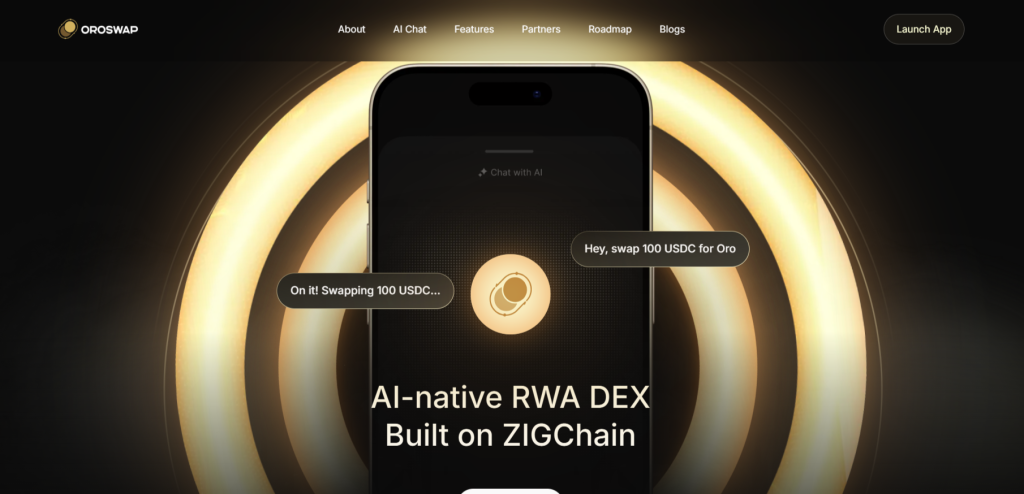
    OroSwap is positioning itself as the first AI-powered DEX on ZIGChain, with features centered around swaps, liquidity, staking, and AI-assisted routing. The project’s public materials describe it as a non-custodial trading platform built for smarter execution and adaptive liquidity management.

    That makes OroSwap interesting for airdrop farmers in 2026 for one simple reason: it is not just another generic points farm. It sits inside the ZIGChain ecosystem, and both the chain and the app already have live public documentation, active product pages, and wallet setup guides. That is a much stronger starting point than the usual unknown claim page with no infrastructure behind it.

    The key angle here is ORE points. Users are being pushed to interact with OroSwap through swaps, liquidity activity, referrals, and other reward-linked actions. At the same time, some reward mechanics appear to be campaign-based and time-limited, which means users should verify the live conditions directly inside the official app before assuming old multipliers or bonuses are still active.

    What OroSwap Actually Is

    According to the official site, OroSwap is an AI-powered decentralized exchange on ZIGChain that supports token swaps, liquidity provision, and staking through a non-custodial interface. The project says it uses AI-powered smart routing to improve execution and also supports concentrated liquidity-style features.

    That matters because OroSwap is not being marketed as a perp DEX in the style of Hyperliquid or other on-chain futures venues. Its positioning is closer to a DEX and liquidity hub inside the ZIGChain ecosystem, with AI as the differentiation layer rather than leverage trading as the main hook.
    oroswap

    Why OroSwap Is Getting Attention From Airdrop Farmers

    Airdrop hunters are paying attention because OroSwap already has a visible reward structure tied to platform activity. The official blog confirms a Refer & Earn system where users who reach $1,000 in total trading volume unlock a referral code, while referred new wallets receive a 2x ORE multiplier for their first 7 days on the platform. Referrers can then earn 5,000 ORE once the referred wallet hits $1,000 in volume and another 25,000 ORE if it reaches $10,000.

    That is the strongest officially verified clue that ORE points are not just cosmetic. OroSwap is already using them as part of a live incentive structure designed to grow trading activity and bring new users into the app.

    How to Get Started With OroSwap the Right Way

    The setup starts with wallet compatibility. OroSwap’s official documentation says users can connect through Keplr Wallet, and the guide walks through adding ZIGChain to Keplr, approving access, and enabling chain visibility. Meanwhile, ZIGChain’s own docs confirm that both Keplr and Leap Wallet are supported for ZIGChain users.

    That means the cleanest onboarding path is:

    1. install Keplr Wallet,
    2. add ZIGChain mainnet,
    3. connect it to the official OroSwap app if available from the project’s official site,
    4. and only then begin reward-linked actions.

    The separate-wallet rule still applies. Even when a project looks legitimate, airdrop farming is cleaner and safer when done through a dedicated wallet rather than the user’s primary holdings wallet.

    What ORE Points Seem to Reward

    The public evidence points to a few clear activity buckets.

    First, swapping matters. OroSwap’s product is built around token exchange, and the reward system clearly references trading volume as a key trigger for unlocking referral functionality and downstream rewards.

    Second, liquidity-related activity appears to matter. OroSwap’s site explicitly supports liquidity provision, and its blog archive highlights campaigns like Deposit to Earn and event-based reward programs tied to liquidity and trading behavior.

    Third, referrals matter in a direct, measurable way. This is not speculation — it is confirmed on the official OroSwap blog. New users can receive a temporary multiplier through a valid invite code, while active traders unlock codes only after hitting real trading volume thresholds.

    cryptoincomehub airdrop crypro

    Is the “Free 5,000 ORE Points” Claim Official?

    This part needs caution.

    I could verify the 2x ORE multiplier for 7 days through OroSwap’s official blog, but I could not verify from a strong primary-source page that every early user is universally entitled to a permanent “free 5,000 ORE” just for a basic social task. That kind of reward may exist as an in-app campaign, a limited-time promotion, or a referral-related milestone, but it was not clearly documented in the strongest official sources I found.

    So the correct way to frame this for readers is simple: check the live reward conditions in the official OroSwap app before assuming any bonus is still available. Reward mechanics can change, expire, or be limited to specific campaign windows.

    Do You Need ZIG to Farm OroSwap?

    In practice, yes, if you want to do more than just connect a wallet.

    ZIGChain documentation confirms that ZIG is the native utility token of the ecosystem, and OroSwap’s own model revolves around trading and liquidity actions on ZIGChain. That means users who want to swap, provide liquidity, or otherwise interact on mainnet will usually need some ZIG to cover real activity and gas-related costs.

    ZIGChain’s wallet and hub docs also confirm that mainnet interactions have real economic value, which is another reason to avoid overcommitting capital just to farm points.

    Should Users Swap, Add Liquidity, or Just Stay Light?

    That depends on risk tolerance.

    For most users, swapping is the cleanest starting action because it aligns directly with how OroSwap measures trading activity and referral unlocks. Liquidity provision may offer more reward potential in some campaigns, but it also introduces more moving parts, including asset exposure and pool risk. OroSwap’s own public materials show that it actively runs different campaign types, including trade-based and liquidity-based reward structures.

    The smarter farming posture is usually:

    • connect a dedicated wallet,
    • verify chain setup,
    • do small real swaps first,
    • monitor the live rewards screen,
    • and only add liquidity if the campaign terms look worth the added risk.

    Why the ZIGChain Connection Matters

    OroSwap is not operating in isolation. It sits inside a broader chain narrative.

    ZIGChain describes itself as a Layer 1 built on Cosmos SDK and focused on wealth-generation protocols, delegated investment infrastructure, and accessible DeFi tools. Its docs also position the chain as a place for builders, investors, and validators, which gives OroSwap a more credible ecosystem context than a standalone anonymous DEX.

    That does not guarantee a token or a massive airdrop. But it does raise the quality of the setup. Ecosystem-native apps with live infrastructure, native token support, and public documentation tend to be more credible than isolated points pages with no surrounding product depth.

    Risks Users Should Keep in Mind

    OroSwap looks more legitimate than the average random airdrop page, but that does not remove risk.

    The first risk is straightforward: ORE points are not the same as a guaranteed token distribution. I found evidence for points, multipliers, and campaign rewards, but not a definitive public statement that every ORE point will convert into a future token claim at a known ratio.

    The second risk is strategy risk. Users can easily overspend on volume just to chase points. Since ZIGChain mainnet activity has real value, farming should be sized sensibly rather than treated like free money.

    The third risk is campaign drift. Reward structures in DeFi change fast, so users should keep checking the official OroSwap blog and official app rather than relying on outdated social screenshots.

    cryptoincomehub

    Final Thoughts

    OroSwap is a real project inside the ZIGChain ecosystem, not just a random landing page with a points counter. It has an official site, official wallet connection docs, visible reward mechanics, and a live referral structure tied to trading behavior. That already puts it in a better category than many low-trust airdrop campaigns.

    The right way to approach it in 2026 is not to assume every rumor is true. It is to focus on what is actually verified: use a supported wallet, connect to official OroSwap surfaces, keep activity reasonable, and treat ORE points as a live incentive system that may become more valuable if the project continues to grow.

    FAQ

    What is OroSwap?

    OroSwap is an AI-powered decentralized exchange on ZIGChain that supports swaps, liquidity provision, staking, and smart routing.

    Does OroSwap have an official rewards system?

    Yes. OroSwap’s official blog documents a live Refer & Earn structure with ORE rewards and a temporary 2x ORE multiplier for referred new wallets.

    Which wallet should users connect to OroSwap?

    OroSwap’s official docs show Keplr Wallet as a supported connection path, and ZIGChain’s docs confirm both Keplr and Leap as supported ZIGChain wallets.

    Is the 2x ORE multiplier real?

    Yes, the official OroSwap blog says referred new users receive a 2x ORE multiplier for their first 7 days on the platform when they join using a valid referral code.

    Is the “free 5,000 ORE” bonus officially confirmed?

    I could not verify a strong primary-source page confirming a universal permanent 5,000 ORE bonus for all early users. Users should check the live campaign terms in the official app.

    Do users need ZIG to farm OroSwap?

    If they want to swap or use the platform meaningfully on mainnet, they will usually need ZIG, since it is the native utility token of the ZIGChain ecosystem.


  • Best Crypto Airdrop Automation Tools in 2026: Track, Check, and Claim Faster

    Best Crypto Airdrop Automation Tools in 2026: Track, Check, and Claim Faster

    Crypto airdrops can still be highly profitable, but the workflow is messy. Users have to monitor multiple wallets, track claim windows, check old addresses, verify eligibility, and avoid fake links. That is why airdrop automation tools are becoming a core part of the process in 2026. The strongest products do not “magically print free money.” They help users automate discovery, eligibility checks, alerts, and workflow management so fewer rewards slip through the cracks.

    The key distinction is important: most reputable tools automate checking and tracking, not fully trustless one-click claiming across the entire market. In practice, the best products help with four jobs: wallet scanning, unclaimed reward discovery, alerting, and organizing what to claim next.

    What Airdrop Automation Actually Means

    When people talk about “airdrop automation,” they usually mean one or more of these things:

    • scanning wallet addresses across multiple chains;
    • checking whether a wallet is eligible for past or current rewards;
    • getting alerts when new claims become available;
    • tracking points, rewards, and upcoming claim dates;
    • organizing many wallets without manually opening dozens of dashboards.

    That makes these tools valuable even for advanced users. The best setup is usually not “click one button and trust everything.” It is using automation for discovery and monitoring, then verifying the actual claim path through the official project page. Drops’ own claim guide explicitly recommends verifying eligibility first and confirming official links before paying gas or proceeding.

    1. Drops — Best for Multi-Wallet Tracking and Alerts

    Drops is one of the most useful airdrop automation tools right now because it focuses on a very practical problem: checking many wallet addresses across many chains without requiring a wallet connection. The platform says users can paste wallet addresses, scan for recent and verified airdrops, and enable Telegram alerts for future eligibility. It also supports bulk checking and covers networks such as Ethereum, Solana, Cosmos, Sui, Aptos, Starknet, Bitcoin, and TON.

    What makes Drops strong is that it automates the highest-friction part of airdrop farming: knowing which wallet is eligible for what. That is especially useful for users managing multiple farming wallets, old DeFi wallets, or a mix of EVM and non-EVM addresses. It is less about “auto-claiming” and more about making sure you do not miss something valuable.

    Best for: serious airdrop farmers, multi-wallet users, cross-chain users, people who want Telegram alerts.

    2. AirdropScan — Best for Wallet Checking Plus Reward Calendar

    AirdropScan positions itself as a wallet checker for unclaimed airdrops, points, and DeFi rewards, and it also has a calendar for upcoming airdrop dates. Its public page highlights support for chains such as Ethereum, Solana, Base, Polygon, Optimism, Arbitrum, Blast, BNB, zkSync, and Zora.

    That combination makes AirdropScan useful for users who want more than a one-time wallet check. The wallet checker helps with existing eligibility, while the calendar layer is useful for planning future actions and claim windows. In other words, it is built for both recovery and workflow management.

    Best for: users who want wallet checking plus a calendar-oriented workflow.

    Polymarket airdrop crypro

    3. Bankless Claimables — Best for Finding Hidden Rewards Beyond Airdrops

    Bankless Claimables is one of the more interesting tools because it goes beyond classic airdrops. Bankless describes it as a free wallet checker for airdrops, rewards, expiring ENS domains, and more, across networks including Ethereum, Solana, Sui, Arbitrum, Optimism, and Base. The product also surfaces different types of recoverable value, not just token drops.

    This matters because many wallets are not sitting on one obvious airdrop. They may have protocol rewards, liquidity incentives, small yield leftovers, or other forgotten claimables. Bankless Claimables is useful when the goal is broader: not just “find me the next retrodrop,” but “show me everything my wallet can recover.”

    Best for: users with older DeFi wallets, LPs, and anyone who wants to recover more than standard airdrops.

    4. ClaimCheck — Best for Simple Read-Only Checks

    ClaimCheck takes a more lightweight approach. The site says users can enter an Ethereum wallet address and instantly scan for rewards from major DeFi projects such as Arbitrum, Optimism, ENS, and Uniswap. It also says the checker uses read-only blockchain queries and requires only a public wallet address, not private keys or seed phrases.

    That makes ClaimCheck useful for users who want a simple, low-friction first pass on known EVM-style rewards without jumping into a more complex dashboard. It is not the broadest system on this list, but it is easy to understand and the read-only positioning is a good fit for cautious users.

    Best for: beginners, quick wallet checks, users who prefer minimal interaction.

    5. Airdrops.io — Best for Guided Claim Workflows

    Airdrops.io is not primarily an automation checker, but it is still one of the most useful workflow tools for users who need structured claiming help. Its claim guide explains different airdrop types, how qualification works, and what users typically need to do for standard, retroactive, and governance airdrops. The site also maintains sections for latest airdrops, hot airdrops, and potential airdrops by ecosystem.

    This is where Airdrops.io fits into automation: not by doing the scanning for you, but by reducing the confusion once you identify an opportunity. For many users, the real bottleneck is not finding a rumor. It is understanding what to do next. Airdrops.io is useful as the “instruction layer” in a larger airdrop workflow.

    Best for: beginners, guided claiming, users who want structured walkthroughs.

    cryptoincomehub

    How to Combine These Tools Into One Efficient Workflow

    The smartest way to automate airdrop work is to use several products for different jobs.

    A clean setup looks like this:

    Use Drops for ongoing wallet monitoring and Telegram alerts. Use AirdropScan for broader wallet checking and calendar visibility. Use Bankless Claimables to uncover forgotten rewards that may not look like standard retrodrops. Use ClaimCheck for quick read-only checks on known EVM wallets. Then use Airdrops.io or official project docs to understand the exact claim steps before signing anything.

    That is a far better system than relying on one “magic auto-claim” tool.

    What These Products Do Well

    The best airdrop automation tools solve three expensive problems:

    First, they reduce missed rewards. If a wallet became eligible months ago, a checker can surface that faster than manual searching. Second, they save time across multiple wallets and chains. Third, they reduce operational chaos by turning airdrop farming into a trackable process instead of a memory game.

    That is why these products are useful even if they do not fully automate final claiming. In crypto, the biggest edge is often not speed at the transaction step. It is visibility.

    What They Do Not Replace

    No tool should replace verification.

    Even if a product finds a claimable reward, users still need to confirm the official claim route, check deadlines, verify network fees, and inspect what they are signing. Drops’ own safety guidance says users should verify official links before claiming and keep gas ready only after confirming the reward is real.

    So the real role of automation is not blind trust. It is better organization.

    Final Thoughts

    The best airdrop automation tools in 2026 are not the ones making the wildest promises. They are the ones that reduce friction without asking users to abandon caution.

    For most users, Drops is the strongest all-around option for alerts and multi-wallet monitoring. AirdropScan is strong for wallet checking plus scheduling. Bankless Claimables is excellent for uncovering hidden recoverable value. ClaimCheck is useful for simple read-only scans. Airdrops.io remains valuable as a claim education and instruction layer.

    The winning approach is simple: automate discovery, automate monitoring, and never automate judgment.

    FAQ

    What is the best airdrop automation tool in 2026?

    For most users, Drops is one of the strongest all-around tools because it supports multi-wallet scanning, multiple chains, bulk checking, and Telegram alerts without requiring a wallet connection.

    Which tool is best for finding old unclaimed rewards?

    Bankless Claimables is especially useful for surfacing broader claimables such as rewards, airdrops, and even expiring ENS-related items, not just classic retrodrops.

    Which airdrop tool is easiest for beginners?

    ClaimCheck is one of the simplest because it focuses on read-only wallet checks using a public address and a narrow, understandable use case. Airdrops.io is also beginner-friendly for guided claiming education.

    Do these tools auto-claim tokens for you?

    Usually not in a fully trustless universal way. The strongest products mostly automate checking, tracking, alerts, and organization. Final claiming often still requires manual verification and official project interaction.

    Is it safe to rely only on an airdrop tool?

    No. Automation tools are useful for discovery and tracking, but users should still verify official claim links and review transactions before signing anything.

  • Why Variational Could Become the Biggest Crypto Airdrop of 2026

    Why Variational Could Become the Biggest Crypto Airdrop of 2026

    The next massive crypto airdrop may not come from a Layer 2, a restaking protocol, or another overhyped points farm.

    It may come from a perpetual DEX.

    As crypto traders continue moving on-chain, the battle for dominance in decentralized perpetual futures is heating up fast. Hyperliquid, Lighter, Paradex, Aster, Extended, and other major players are all competing for users, liquidity, and attention. But in the middle of that increasingly crowded market, Variational is quietly building a strong case for itself.

    It is not the loudest project in the sector. It is not trying to win with social media drama. And that may be exactly why more traders are starting to take it seriously.

    For users hunting the next high-upside opportunity, Variational is shaping up to be one of the most interesting names in the perp DEX ecosystem. And if the platform eventually launches a token, it could become one of the biggest crypto airdrops of 2026.

    Why Perp DEXs Matter So Much in 2026

    Perpetual decentralized exchanges have become one of the most important battlegrounds in crypto.

    The logic is simple. If more trading capital moves on-chain, perp DEXs stand to capture a massive share of that activity. And while the sector is already growing, many traders believe decentralized perpetual trading is still early compared with its long-term potential.

    That is what makes the category so attractive.

    At the same time, there is also a clear problem. A large part of today’s perp DEX volume appears to be driven by airdrop farming. Many users are not interacting with these platforms because they plan to stay forever. They are there because they want exposure to a future token distribution.

    That dynamic can create a short-term boom followed by a post-airdrop collapse. Once rewards are distributed, users often leave and move on to the next opportunity.

    Still, that does not mean every perp DEX will follow the same path.

    A few winners are likely to emerge, especially as execution improves, fees fall, and more serious trading capital starts moving on-chain. Variational is now being viewed by some traders as one of those potential winners.

    What Makes Variational Stand Out

    There is no shortage of perpetual DEXs in 2026. The market is already full of serious competitors with strong backing and growing communities.

    So why are traders paying attention to Variational?

    The biggest answer is cost efficiency.

    Variational is gaining traction because it offers a model with no maker fees and no taker fees. In a trading environment where fees can quietly destroy profitability, that is not a small detail. It is a major edge.

    For active traders, especially those making frequent entries and exits, reducing fee drag can completely change the economics of a strategy. A setup that barely works on a higher-fee venue may become much more viable on a platform built around lower friction.

    That is one of the main reasons Variational is being discussed more seriously as both a trading venue and a possible airdrop target.

    cryptoincomehub Airdrop

    The Real Edge: Zero Fees in a High-Volume Market

    Many crypto users underestimate how much fees matter until they start trading size.

    On paper, the difference between platforms can look small. In practice, it can mean thousands or even tens of thousands of dollars over time for active traders. That is especially true for users who trade short-term momentum, rebounds, or small intraday moves where profit margins are already tight.

    This is where Variational appears to be winning attention.

    According to the perspective shared in the transcript, the platform has become one of the cheapest DEXs available for active trading. That matters because users are not just comparing narratives anymore. They are comparing execution quality, cost structure, and actual sustainability.

    In a market full of incentive-driven volume, lower fees may end up being one of the most powerful retention tools any perp DEX can offer.

    How Variational’s Model Differs From Competitors

    Variational’s retail perpetuals product, Omni, is part of what makes the platform interesting.

    Rather than relying on a more standard setup used by some competitors, the protocol appears to handle market making differently, with profits generated through spreads rather than explicit trading fees. The result, at least from the user perspective described in the source material, is highly competitive pricing.

    That is an important distinction.

    A platform that can grow through spreads instead of leaning on visible fees may have a more scalable path in the long run, especially if user activity keeps rising. It also creates a trading experience that feels cleaner for the end user, which can be a serious advantage when competing for market share.

    There is also the possibility that liquidity provisioning may expand further in the future, potentially creating even better depth and pricing as the ecosystem matures.

    Variational Is Taking a Different Approach to Growth

    One of the more interesting points in the transcript is not just about product design. It is about tone.

    The perp DEX space has become highly competitive, and some projects are aggressively fighting for attention online. Public founder disputes, ecosystem rivalries, timeline wars, and viral marketing tactics are becoming part of the playbook.

    Variational appears to be doing the opposite.

    Instead of pushing constant noise, the project seems more focused on publishing platform stats, user activity, and product-related updates. That may sound less exciting on the surface, but for many traders it signals something more important: seriousness.

    In crypto, loud marketing can attract temporary users. A product-first culture is usually what keeps them.

    The Numbers Suggest Variational Is Not Just Early Hype

    What makes the Variational thesis more compelling is that the project is not being discussed in a vacuum.

    Based on the figures mentioned in the transcript, the platform has already reached $80 billion in total volume and is doing around $1 billion in daily volume. Recent two-week revenue was described as just over $700,000.

    Critics might argue that this revenue is still lower than what fee-charging competitors generate. That is fair on the surface, but it may also miss the bigger picture.

    If Variational is operating on a lower-fee model while still building serious trading activity, then the upside may be much larger as open interest expands and on-chain capital continues to grow. A platform designed for scale does not need to maximize extraction at the earliest stage if the long-term goal is to dominate through better economics and stronger user experience.

    That is why some traders believe Variational’s current numbers may be more impressive than they first appear.

    Why Traders Believe the Growth Could Accelerate Fast

    The bullish case for Variational is tied directly to the broader shift toward on-chain trading.

    Many traders believe the current state of decentralized perpetual trading is still only the beginning. If more capital moves from centralized venues into on-chain execution, then the leading perp DEXs could see far larger volumes than the market sees today.

    That would change everything.

    Under that kind of adoption curve, a platform like Variational would not just be competing for current users. It would be competing for a much larger future market. And if it keeps improving product quality while preserving its cost advantages, it could become one of the standout winners.

    That is where the airdrop speculation becomes more interesting.

    Because if a platform is still relatively early, still growing, and still building out its ecosystem, then active users today may be positioning themselves ahead of a much bigger reward event later.

    cryptoincomehub Airdrop

    The Loss Refund Mechanic Adds a Gamified Layer

    Another unusual feature helping Variational stand out is its loss refund lottery.

    The idea is simple but effective. Some losing trades may be refunded through a lottery-style mechanic, creating a more engaging experience for active users. From a purely rational perspective, it does not fundamentally change the structure of trading. But from a product engagement standpoint, it clearly matters.

    Crypto users respond strongly to gamified experiences, especially when those mechanics soften the emotional downside of active trading. A refunded loss can turn a frustrating moment into a positive one, and that kind of design can make a platform feel more rewarding to use over time.

    That matters more than it may seem, especially in a market where so many users are only one click away from farming somewhere else.

    More Products Could Strengthen the Ecosystem

    Another reason Variational is gaining attention is that the current product suite may not be the full picture.

    The transcript references Variational Pro as an upcoming part of the ecosystem, which suggests the team is planning to expand beyond the current trading experience. That is an important signal because the most valuable airdrops often come from ecosystems that evolve into broader product platforms.

    A protocol with multiple user touchpoints has a stronger chance of building lasting participation. It also creates more possible paths for reward systems, points structures, and future ecosystem incentives.

    For airdrop hunters, that is exactly the type of setup worth watching closely.

    Why This Could Become One of the Biggest Airdrops of 2026

    Not every promising platform becomes a top-tier airdrop opportunity.

    But Variational has several ingredients that usually attract serious speculation:

    • it operates in one of crypto’s hottest sectors;
    • it already has visible traction;
    • it offers a differentiated fee structure;
    • it appears to have a strong user experience;
    • it is still early enough for new users to get involved;
    • and it may be building toward a broader ecosystem.

    That combination is hard to ignore.

    In crypto, the biggest airdrops usually come from protocols that are not just popular, but also useful, sticky, and early in their growth cycle. Variational fits that narrative better than many projects being discussed today.

    That does not guarantee anything. There is no confirmed outcome until a project officially announces one. But if the question is which platforms are worth watching as possible breakout airdrop candidates, Variational clearly belongs in the conversation.

    Risks Traders Should Not Ignore

    Even the strongest airdrop thesis comes with risks.

    Perp DEX activity can be heavily distorted by farming behavior, which makes it difficult to know how much of the volume is truly organic. There is also the risk that a future token launch, if it happens, could disappoint users through dilution, weak eligibility rules, or poor post-launch performance.

    And beyond the airdrop angle, perpetual futures trading itself is risky. Active trading without discipline can lead to losses quickly, no matter how attractive the platform is.

    So while Variational may be a compelling opportunity, it should be approached with realistic expectations. It is a project to evaluate carefully, not blindly chase.

    Final Thoughts

    Variational is not just another perp DEX trying to ride the 2026 hype cycle.

    It is emerging as a serious contender in one of the most important sectors in crypto, with a model built around low trading friction, scalable economics, strong user engagement, and long-term product expansion. That alone makes it worth paying attention to.

    If the move toward on-chain perpetual trading continues at the pace many expect, Variational could become one of the major winners of this cycle.

    And if that happens, its eventual token distribution may become one of the biggest crypto airdrops of 2026.

    For traders and airdrop hunters looking for early positioning, that is not a narrative worth ignoring.

    FAQ

    What is Variational?

    Variational is a decentralized perpetual trading platform that is attracting attention in 2026 because of its zero-fee model, growing activity, and potential future airdrop narrative.

    Why do traders think Variational could have a major airdrop?

    The platform is active in the rapidly growing perp DEX sector, appears to have meaningful volume, and offers a differentiated product experience. Those factors often make a protocol a strong airdrop candidate.

    What makes Variational different from other perp DEXs?

    Its biggest advantage appears to be the absence of maker and taker fees, along with competitive pricing and a product experience that some traders find more efficient than other decentralized exchanges.

    Is Variational guaranteed to launch a token or airdrop?

    No. There is no guarantee unless the project officially confirms it. The current interest is based on user speculation, platform growth, and the broader behavior of crypto protocols in similar stages.

  • Top Mistakes Airdrop Farmers Still Make in 2026

    Top Mistakes Airdrop Farmers Still Make in 2026

    Airdrop farming did not die. It professionalized. In 2026, the biggest losses come not from missing the next big drop, but from using an outdated playbook in a market that has already moved on.

    Crypto airdrop farming still works in 2026, but the market no longer rewards lazy behavior. The easy phase of bridge-swap-repeat is gone, replaced by claim dashboards, points systems, mission frameworks, and ecosystem incentives designed to filter out weak activity. That has changed the failure points too. Today, most users do not miss rewards because they were too late; they miss them because they classify opportunities badly, chase hype over structure, ignore timelines, and mistake noise for eligibility.

    Here are the biggest mistakes airdrop farmers still make in 2026 — and what smarter operators do differently.

    1. Treating every reward program like a standard airdrop

    This is still the most common mistake in the market.

    A live claim is not the same as a points program. A foundation-backed incentive campaign is not the same as a mission framework. A speculative watchlist is not the same as an active reward system. Yet many users still flatten everything into one category: “airdrop.”

    That leads to bad decisions immediately. They allocate time to weak programs, ignore high-clarity opportunities, and compare fundamentally different reward structures as if they were interchangeable.

    In 2026, the first job is classification. You need to know whether you are looking at a live token claim, an ecosystem incentive program, a mission-based rewards framework, a points system with a defined conversion path, or a purely discretionary scorekeeping model. If you get that wrong, everything after that gets worse.

    2. Confusing activity with eligibility

    A lot of users still think doing “something” is enough.

    It is not.

    Modern reward systems increasingly care about what kind of activity you performed, how often you performed it, how long you stayed active, and whether your behavior looks meaningful from the protocol’s perspective. A wallet with dozens of random transactions is not automatically stronger than a wallet with fewer, higher-quality actions. In many cases, the opposite is true.

    The lazy assumption is simple: more transactions means more rewards.
    The 2026 reality is harsher: better participation means better odds.

    Low-signal repetition is easier to filter than thoughtful usage across time.

    3. Farming expired narratives

    This remains one of the most embarrassing mistakes in crypto.

    Some users still spend time following guides built around ecosystems whose flagship reward event already happened. They are not evaluating active opportunities. They are replaying old narratives.

    That does not mean mature ecosystems are useless. Secondary opportunities can still exist through adjacent apps, ecosystem campaigns, governance structures, or new reward layers. But that is very different from pretending the original headline airdrop is still the main trade.

    Bad farming often starts with bad editorial hygiene. If you are operating from outdated assumptions, you are not early. You are simply late and uninformed.

    4. Chasing social hype instead of official structure

    Too many farmers still rely on Crypto Twitter momentum as if it were a reward mechanism.

    It is not.

    A project trending on social media may still have no official campaign, no public reward logic, no timeline, and no reason to believe current activity will ever convert into something valuable. Hype can matter because it draws attention toward emerging ecosystems, but it is not evidence of a reward path.

    In 2026, official structure matters more than community excitement. If there is no clear incentive design, no campaign architecture, and no sign the protocol is intentionally tracking the behavior you are performing, then you are speculating — not farming.

    That is fine, as long as you label it honestly.

    5. Ignoring timelines

    Airdrop farmers still underestimate time risk.

    Some programs have hard deadlines. Some have rolling epochs. Some have campaign windows. Some remain open-ended. And some quietly become much less attractive as the best participation window closes.

    If you do not understand the timeline, you cannot estimate the opportunity properly.

    This matters for two reasons. First, undefined timelines destroy prioritization. You do not know what needs immediate action and what can wait. Second, timing often changes the economics. Early users may get multipliers, better weight, lower competition, or access to narrower reward pools. Late entrants may technically still participate, but under much worse conditions.

    Airdrop farming is not just about what you do. It is also about when you do it.

    6. Trying to farm everything

    Another persistent mistake is trying to be everywhere at once.

    That approach made more sense when interactions were cheap, competition was looser, and the upside from broad exposure was higher. In 2026, it is usually a wasteful strategy.

    Serious farmers are more selective now. They think in terms of time spent, capital locked, gas or bridging costs, complexity, expected reward quality, and confidence in the reward mechanism. That is what capital efficiency means in practice.

    You are not trying to touch every ecosystem. You are trying to choose the ones where effort and upside still align.

    Scattered attention is one of the fastest ways to get mediocre results everywhere.

    7. Overvaluing points with no defined destination

    Points can matter. But not all points deserve the same weight.

    Some systems clearly connect points to a broader rewards framework. Others use points mainly to stimulate engagement while preserving maximum discretion over any future conversion. That distinction matters enormously.

    Too many users see the word “points” and mentally translate it into “future token.” That is lazy thinking. In 2026, you have to ask harder questions. Do points have a stated role? Is there a defined season or conversion logic? Is there a precedent for distribution? Are users earning something concrete, or just accumulating abstract score?

    Points can be valuable. They can also become a sink for time and capital when users assume more than the protocol has actually promised.

    8. Using obviously low-quality behavior

    Protocols are not stupid. Their reward systems are getting better at filtering manufactured activity.

    That means the old spam approach is increasingly self-defeating: meaningless loops, tiny repetitive swaps, inorganic wallet behavior, one-day bursts of scripted activity, and clearly mechanical participation across multiple accounts.

    Many farmers still act as if reward systems only count raw actions. That assumption gets weaker every cycle.

    Projects increasingly want users who look like real traders, real liquidity providers, real borrowers, real governance participants, or real ecosystem contributors. You do not need to be a whale. But you do need to look like a participant rather than a noise generator.

    9. Ignoring the economic logic of the protocol

    This is where weak farmers separate from strong ones.

    The best question is not “What actions can I do?”
    It is “What behavior does this protocol actually want?”

    A chain trying to deepen DeFi liquidity will value different behavior than a perp exchange trying to reward trading volume, or a BTCFi ecosystem trying to build lending and collateral usage, or a consumer app trying to reward retention.

    When users ignore the protocol’s economic priorities, they often perform low-value actions that technically exist on-chain but do not map to what the team is actually trying to grow.

    Better farming starts with understanding the protocol’s business logic.

    Crypto Airdrops

    10. Assuming opacity means higher upside

    A lot of users still assume the most opaque opportunities have the highest upside.

    Sometimes that is true. Often it is not.

    In many cases, clearer programs produce better risk-adjusted outcomes because users know what they are earning, how long the campaign lasts, what behavior is being rewarded, and whether there is an official path to distribution.

    Opaque programs may still pay. But opacity is not a bullish signal on its own. It often just means you are taking more uncertainty than you admit.

    The strongest farmers in 2026 do not just chase maximum upside. They balance upside against clarity.

    That is a much more professional way to allocate effort.

    11. Forgetting that claims are part of the strategy

    Some users spend months farming and then get careless at the most basic step: actually claiming.

    This sounds ridiculous, but it keeps happening. Claim windows are missed. Dashboards go unchecked. Eligibility is never verified. Deadlines pass because users are too focused on the next speculative opportunity to manage the reward already in front of them.

    In a mature market, claims management is part of farming.

    A live, time-bounded claim is often more valuable than another month spent guessing which speculative points system might eventually do something.

    12. Following content that refuses to age honestly

    Airdrop farmers still rely too much on content that never updates its assumptions.

    That is dangerous because the incentives market evolves fast. A guide that was accurate two months ago may already be misleading if the claim window closed, the reward structure changed, a season ended, points lost relevance, or the project introduced a more targeted incentive model.

    The publication that matters in 2026 is not the one with the longest list. It is the one that is hardest to embarrass later.

    Farmers should demand the same standard from themselves. The question is not whether you found a list. The question is whether the logic in that list is still alive.

    Comparison Table: Mistake / Why It Hurts / What To Do Instead

    Mistake Why It Hurts What To Do Instead
    Treating every reward program like a standard airdrop You misprice time, capital, and expected outcome because claims, points, missions, and ecosystem incentives all work differently Classify each opportunity first: live claim, incentive program, mission framework, structured points, or discretionary points
    Confusing activity with eligibility More transactions do not automatically mean better rewards; low-quality behavior is easier to filter Focus on meaningful actions: sustained usage, real liquidity, trading, borrowing, or contribution
    Farming expired narratives You waste time on ecosystems whose main reward event already passed Separate historic drops from active campaigns and current ecosystem incentives
    Chasing social hype instead of official structure Social momentum is not proof of a reward path Check for official docs, campaign design, timelines, and distribution logic before allocating effort
    Ignoring timelines Undefined or missed windows destroy expected value and prioritization Track deadlines, epochs, campaign end dates, and early-user windows before entering
    Trying to farm everything Your capital and attention get diluted across too many weak opportunities Concentrate on fewer, higher-conviction programs where effort and upside align
    Overvaluing points with no defined destination Points can become a sink for time if there is no stated conversion or reward path Ask what points represent, whether there is season logic, and whether conversion is official or discretionary
    Using obviously low-quality behavior Protocols increasingly filter mechanical spam and inorganic activity Act like a real participant, not a bot: use products naturally and across time
    Ignoring the protocol’s economic logic You may do actions that exist on-chain but do not matter to the protocol’s goals Identify what the project actually wants to grow: liquidity, volume, retention, lending, governance
    Assuming opacity means higher upside Unclear programs often just mean higher uncertainty, not better returns Balance upside against clarity and prefer programs you can evaluate properly
    Forgetting to manage claims You can farm for months and still lose rewards by missing the claim window Treat claim tracking as part of the strategy, not an afterthought
    Following stale content Old guides can send you into closed or degraded opportunities Use recent, official, and verifiable sources; update assumptions constantly

    Conclusion

    The biggest airdrop mistakes in 2026 are no longer beginner mistakes in the old sense. They are structural mistakes.

    People still fail because they classify programs badly, overvalue shallow activity, ignore timelines, chase hype, misread points, and underprice clarity.

    The market did not eliminate opportunity. It eliminated lazy opportunity.

    That is an important difference.

    Because once easy money disappears, discipline becomes the edge.

  • How to Evaluate a Crypto Airdrop in 2026

    How to Evaluate a Crypto Airdrop in 2026

    The old airdrop playbook was built for a market that no longer exists. In 2026, the edge comes from understanding structure, not chasing headlines.

    Airdrop farming did not disappear. It professionalized. The market has shifted away from vague “use the product and hope” setups toward claims dashboards, foundation-backed incentive programs, mission frameworks, and points systems with explicit rules — even if those rules do not always guarantee a token payout. Galaxy’s research on crypto points programs captured this transition early: points became a mainstream mechanism for incentivizing user behavior, but they also introduced more ambiguity around rights, eligibility, and eventual conversion.

    That means the first mistake to avoid in 2026 is treating every rewards program as the same thing. They are not. A live claim such as Sonic is fundamentally different from a structured ecosystem incentive like Starknet BTCFi, a mission-based rewards framework like Core Missions, or a discretionary points system like Hemi. If you collapse all of those into one “airdrop” bucket, you will make bad decisions on both time allocation and capital deployment.

    Start by classifying the opportunity

    The cleanest opportunities are live claims. Sonic is the best current example. The official MySonic portal says Season 2 has ended, allocations from Season 1 and Season 2 can now be claimed, and the deadline is October 15, 2026 at 12:00 GMT. That is high-clarity information: the reward mechanism is official, the user action is obvious, and the clock is visible. In practical terms, this is not a “farm and hope” trade anymore — it is a claims-management task.

    The next category is the structured incentive program. Starknet BTCFi Season fits here. The Starknet Foundation says the program launched on September 30, 2025, has a 100 million STRK budget, and is set to run for a minimum of six months, potentially longer. But there is a critical nuance: users do not claim directly from the Foundation. Participating protocols design and distribute their own user rewards. That makes the opportunity real, but operationally more complex than a single central claim page.

    Then there are points programs with a clearly defined schedule. Ethena Exchange Points on Ethereal is one of the strongest active examples. Ethereal says the campaign is a six-month program, that it has been allocated 100 million points weekly, and that points accrue across 24 weekly epochs based on authentic trading activity. Ethereal’s docs further state that authentic trading also earns Ethereal Points and Ethena Exchange Points that convert into ENA at the end of the program. That is not the same thing as a guaranteed token claim today, but it is still much more concrete than a generic leaderboard with no stated end state.

    Another category is the campaign or mission framework. Core Missions is a good illustration. Core says users can register for active missions, complete qualifying tasks, and many missions reward users in stCORE. Rewards are calculated after the mission ends, and distribution timelines vary by campaign. This is useful because it is structured and operationally simple, but it also means there is no single universal deadline or payout logic across the platform. Every mission must be evaluated on its own terms.

    Finally, there is the discretionary points model. Hemi is explicit about the limitation: its docs say points are intended to encourage beneficial network activity, carry no monetary value or financial rights, and any conversion to rewards happens at Hemi’s sole discretion. Hemi also frames its incentives across Season 1: Testnet, Season 2: Mainnet + TGE, and post-TGE seasons. That does not make Hemi irrelevant. It makes it lower-certainty. In editorial terms, Hemi belongs in the watchlist bucket, not the high-conviction bucket.

    Ask what you are actually earning

    This sounds basic, but it is where a surprising amount of airdrop content still fails.

    In Sonic, you are dealing with an actual claim process tied to an existing allocation window. In Starknet BTCFi, users are ultimately earning STRK, but only through participating protocols, each with its own rules. In Core Missions, the reward may be stCORE, and the amount depends on mission-specific prize pools and participation. In Hemi, you are earning points that may or may not convert into a future reward. Those are radically different payoff profiles, and they should never be valued the same way.

    Ethereal is a useful case study because the reward stack is unusually transparent. According to Ethereal’s docs, all USDe balances earn USDe Balance Rewards, positions held for at least one hour qualify for USDe Trading Rewards, total USDe rewards are capped at 27.1828% APR based on average margin balance, and authentic trading activity also earns Ethena Exchange Points that convert into ENA at the end of the program. That is a richer and more quantifiable reward profile than a generic points farm — but it also assumes the user is comfortable with trading and capital deployment, not just passive clicking.

    Then check the timeline — because undefined timelines destroy expected value

    A serious farmer should care as much about time structure as about reward size.

    Sonic publishes a hard deadline: October 15, 2026. That makes prioritization easy. Starknet BTCFi launched on September 30, 2025 and was designed to run for at least six months, which means that as of March 20, 2026, it still sits within or just beyond that guaranteed minimum window and requires users to verify the currently active participating protocols and terms. Ethena Exchange Points has one of the clearest rolling structures: six months, 24 weekly epochs, 100 million points per week. These are the kinds of details that let users estimate whether a campaign is still worth entering.

    Katana shows why timing can matter even more than headline size. Katana says its mainnet launched with over $240 million in pre-deposits and 1 billion KAT allocated as incentives to bootstrap the chain. But the most attractive early-user terms are narrower: the pre-staking campaign says committed KAT receives 3x voting weight and 3x reward weight stepping down over the first eight weeks, while the first 350 million KAT pre-staked gets a guaranteed 35% over the first 60 days, with treasury top-ups in vKAT if needed. That means missing the early window can materially change the trade.

    In other words, an undefined program is not automatically bad — but it is automatically harder to price. And if you cannot price the time window, you cannot properly compare one opportunity against another.

    Crypto Airdrops

    Next, examine whether the rewarded behavior is economically meaningful

    This is where high-quality programs separate themselves from noise.

    Sonic’s Season 2 structure is instructive because the project explicitly moved away from passive points. Sonic said Season 2 rewarded users for actively deploying whitelisted assets across ecosystem apps and that passive points no longer existed. That is a sign the chain wanted real usage, not idle balances.

    Starknet BTCFi is even more specific. The Foundation says the program supports protocols that enable highly liquid BTC pools on DEXs and money markets and stablecoin borrowing against BTC collateral. That is not cosmetic activity. It is targeted liquidity and credit formation around a core ecosystem thesis.

    Ethereal’s criteria point in the same direction. The platform says points are based on authentic trading activity, while its broader points system takes into account factors including fees paid, open interest, liquidations, maker/taker volume, and referrals. Whatever one thinks of the economics, that is clearly more robust than rewarding users for a single bridge and one swap.

    Scroll Sessions is a good contrast. Scroll describes Sessions as a loyalty program that awards Scroll Marks for participation and engagement in the ecosystem, beginning with actions such as bridging assets to Scroll. Scroll also says Session 2 is designed to encourage the long-term growth of assets and protocols on the network. That is directionally promising, but without a more explicit reward conversion mechanism in the materials reviewed here, it still belongs closer to a monitored ecosystem program than a top-tier, high-clarity opportunity.

    Crypto Airdrops

    Finally, weigh clarity against upside

    One of the biggest mistakes in 2026 is assuming the highest upside sits in the least transparent programs. Often the opposite is true.

    Sonic may not have the glamour of a speculative new ecosystem, but it offers something rare: official eligibility logic, a live claims flow, and a visible deadline. That clarity is valuable. Starknet BTCFi offers a large reward budget and foundation-level credibility, but users must deal with protocol-level fragmentation. Ethereal arguably offers the strongest live reward stack for active traders, yet it also demands real trading behavior and capital management. Hemi may still produce upside, but its own docs explicitly warn that points are not financial rights. Each of these can be rational. None of them should be treated as interchangeable.

    That is the real framework: do not ask whether a campaign is “real” in some vague social-media sense. Ask four narrower questions. Is the reward mechanism official? What exactly are you earning? What is the time window? And does the required activity map to something economically meaningful for the protocol? The more precisely you can answer those questions, the less likely you are to waste time on noise. The less precise the answers, the smaller your allocation of time, capital, and attention should be.

    Conclusion

    The airdrop market in 2026 is still full of opportunity. It is just no longer a market that rewards lazy pattern-matching.

    The best operators are not the ones joining every quest. They are the ones classifying reward systems correctly, recognizing when a “points” program is really a structured incentive funnel, and knowing when a live claim is worth more than another month of speculative farming. In a noisier market, clarity is the edge.

  • Best Crypto Airdrops and Reward Campaigns to Farm Right Now (March 2026)

    Best Crypto Airdrops and Reward Campaigns to Farm Right Now (March 2026)

    The easy era of crypto airdrops is over. What remains in 2026 is a more structured market: live claim windows, foundation-backed incentive programs, and points systems with explicit onchain requirements. That does not make the opportunity smaller. It makes the filtering more important.

    This shortlist focuses on campaigns that still have a live claim window, a clearly documented reward mechanism, or an official program that is still open as of March 19, 2026. In other words, this is not a recycled list of already-expired flagship drops. It is a working watchlist.

    1. Sonic: the cleanest live claim window on the board

    Sonic is the most straightforward item on this list because it is no longer a speculative farm. It is a live claim. The official MySonic dashboard states that users can claim allocations from Season 1 and Season 2, and it publishes a hard deadline of October 15, 2026 at 12:00 GMT. Sonic’s own documentation also makes clear that Season 2 has already ended and that future incentive programs will be announced later, which means the trade here is simple: check eligibility and claim, rather than continue farming a concluded season.

    What made Sonic meaningful was the structure behind the allocation. Season 2 removed passive holding rewards and shifted to activity-only points, meaning users had to deploy whitelisted assets across Sonic DeFi apps through LP, lending, and other qualifying actions. Sonic also layered in a loyalty multiplier that could scale from 1.0x to 3.0x based on sustained participation. That matters because it tells late readers what kind of behavior the chain actually rewarded.

    Why it makes the list: this is the best combination of low ambiguity and live action. If you have ever touched Sonic seriously, this should be one of the first dashboards you check.

    2. Starknet BTCFi Season: one of the clearest foundation-backed incentive programs still running

    If you want an active program rather than a retroactive claim, Starknet’s BTCFi Season remains one of the cleaner setups in the market. The Starknet Foundation launched BTCFi Season on September 30, 2025, committed 100 million STRK to the program, and said it would run for a minimum of six months, with the option to continue beyond that. On a March 19, 2026 publication date, that still places the campaign inside its guaranteed minimum window.

    The mechanics are also unusually explicit for a foundation program. Starknet says BTCFi Season is designed to support protocols that enable highly liquid BTC pools on DEXs and money markets and stablecoin borrowing against BTC collateral. Allocations are reviewed weekly, but distribution to end users is handled by participating protocols themselves. In practice, that means users should focus on the BTCFi site’s eligible protocols and then follow each protocol’s own reward rules rather than assume a single universal formula.

    Why it makes the list: the pool size is large, the Foundation is public about the structure, and the behavior being rewarded is economically meaningful rather than purely cosmetic. The downside is that users still need to understand protocol-level terms instead of relying on a single claim portal.

    3. Ethereal x Ethena Exchange Points: arguably the strongest active “points plus real yield” setup

    The best active points campaign right now may be the Ethena Exchange Points program tied to Ethereal. Ethena and Ethereal state that the campaign launched on February 3, 2026, runs for six months, and allocates 100 million points per week to Ethereal. Ethereal’s own post also says points accrue across 24 weekly epochs, which implies a schedule stretching into late July 2026, though users should still monitor the official dashboard for any final timetable changes.

    What makes this more interesting than a generic leaderboard is that Ethereal stacks multiple reward layers on top of each other. Official docs say all USDe balances on the exchange earn USDe Balance Rewards, while positions held for at least one hour qualify for USDe Trading Rewards. Ethereal further states that up to 25% of exchange fees flow back into the USDe Trading Rewards pool, distributed pro rata by average share of open interest, and that total USDe rewards are capped at 27.1828% APR on average margin balance. On top of that, authentic trading activity also earns Ethena Exchange Points, which Ethereal says will convert into ENA at the end of the program.

    Why it makes the list: this is one of the few current campaigns where the reward stack is both diversified and documented. You are not just hoping for a future token event; you are combining points, fee-based rewards, and balance-based rewards in a single venue. The obvious catch is that this is better suited to real traders than casual click farmers.

    Best Crypto Airdrops and Reward Campaigns to Farm Right Now (March 2026)

    4. Katana: a fresh launch-phase incentive complex with real size behind it

    Katana deserves attention because it is one of the few 2026-era launch environments that is still aggressively rewarding users. Katana’s recent tokenomics post says 1 billion KAT — 10% of total supply — is allocated to core-app user incentives, with about 500 million KAT expected to be distributed in the first six months following public mainnet. Its recent mainnet post also says the chain launched with over $240 million in pre-deposits and users are being rewarded from day one.

    There are several ways into the Katana stack, but the two most concrete right now are the community airdrop and pre-staking. Katana says that 140 million vKAT tied to traditional staked POL became claimable on March 18, 2026, based on POL staking activity from May 1, 2025 through March 3, 2026. For users already inside the Katana economy, pre-staking is live and materially attractive: official docs and blog posts say pre-stakers receive 3x voting power and reward weight at launch, decaying over the first eight weeks, and the first 350 million KAT pre-staked qualifies for an official 35% yield floor over the first 60 days, with treasury top-ups in vKAT if organic yield comes in below that threshold.

    Why it makes the list: the reward size is real, the docs are unusually detailed, and the campaign is early enough that users are still operating in the launch window rather than the post-distribution leftovers. The trade-off is complexity: Katana is not a one-click claim story, and users should verify the latest app-side flow before acting because the project is moving quickly through launch milestones.

    5. Core Missions: a simpler campaign-driven alternative for users who prefer structured tasks

    Core Missions is less glamorous than a major token drop, but it is one of the more practical reward systems live right now. The official site describes it as a campaign-based framework where users earn rewards for interacting with dApps across the Core ecosystem through activities such as swapping, bridging, minting NFTs, providing liquidity, and using vault strategies.

    The most important detail is how rewards are handled. Core says many missions reward users in stCORE, and that each mission has its own prize pool, rules, and distribution schedule. Rewards are calculated after a mission ends and can be claimed from the dashboard if the user qualifies. In other words, this is a rotating campaign system rather than a single monolithic airdrop.

    Why it makes the list: it is active, concrete, and operationally simple. The limitation is that there is no single universal deadline; timelines differ by mission, which means active monitoring matters more than passive positioning.

    6. Hemi: a higher-risk, more speculative points trade

    Hemi is the most speculative inclusion here, but it is still worth watching for readers comfortable with that label. Hemi’s docs say users may be eligible to earn points through active quests and tutorials, and the project has an official points framework spanning Season 1 testnet, Season 2 mainnet plus TGE, and post-TGE seasons. Tutorials currently point users toward an active dashboard for quests covering wallet setup, bridging, staking, Safe wallets, and other network actions.

    The caveat is explicit and important: Hemi says its points carry no monetary value or financial rights, and any exchange or conversion into rewards is entirely at Hemi’s discretion. That makes this a watchlist item rather than a core allocation of time and capital. But in a market where many meaningful token distributions begin as structured points systems, it is still a program worth tracking.

    Why it makes the list: active quests exist right now, but this belongs in the “optional upside” bucket, not the “high-conviction reward” bucket.

    Project Type Status Rewards Deadline / Duration Complexity Best For
    Sonic Token Airdrop (Claim) ✅ Live Token allocation Oct 15, 2026 Low Everyone (check eligibility)
    Starknet BTCFi Incentive Program ✅ Active STRK rewards Min. 6 months (since Sep 2025) Medium DeFi users
    Ethereal × Ethena Points + Yield ✅ Active Points + USDe rewards ~6 months (from Feb 2026) High Traders
    Katana Ecosystem Incentives ✅ Early Stage KAT / vKAT rewards Ongoing (early phase) High Advanced users
    Core Missions Task Campaigns ✅ Active stCORE / ecosystem rewards Varies per mission Low Beginners / consistent users
    Hemi Points Program ⚠️ Speculative Points (no guaranteed token) Multi-season (ongoing) Medium Optional / early adopters

    Final take

    If the goal is to prioritize by clarity, Sonic is the easiest immediate action because it is a live claim with a published deadline. Ethereal x Ethena is the strongest active reward stack for users who are already comfortable with trading. Starknet BTCFi Season is the best foundation-backed ecosystem campaign on the board. Katana is the highest-conviction launch-phase bet if you are willing to handle more moving parts. Core Missions is the cleanest task-driven alternative. Hemi is the speculative watchlist name, not the first place to spend serious capital.